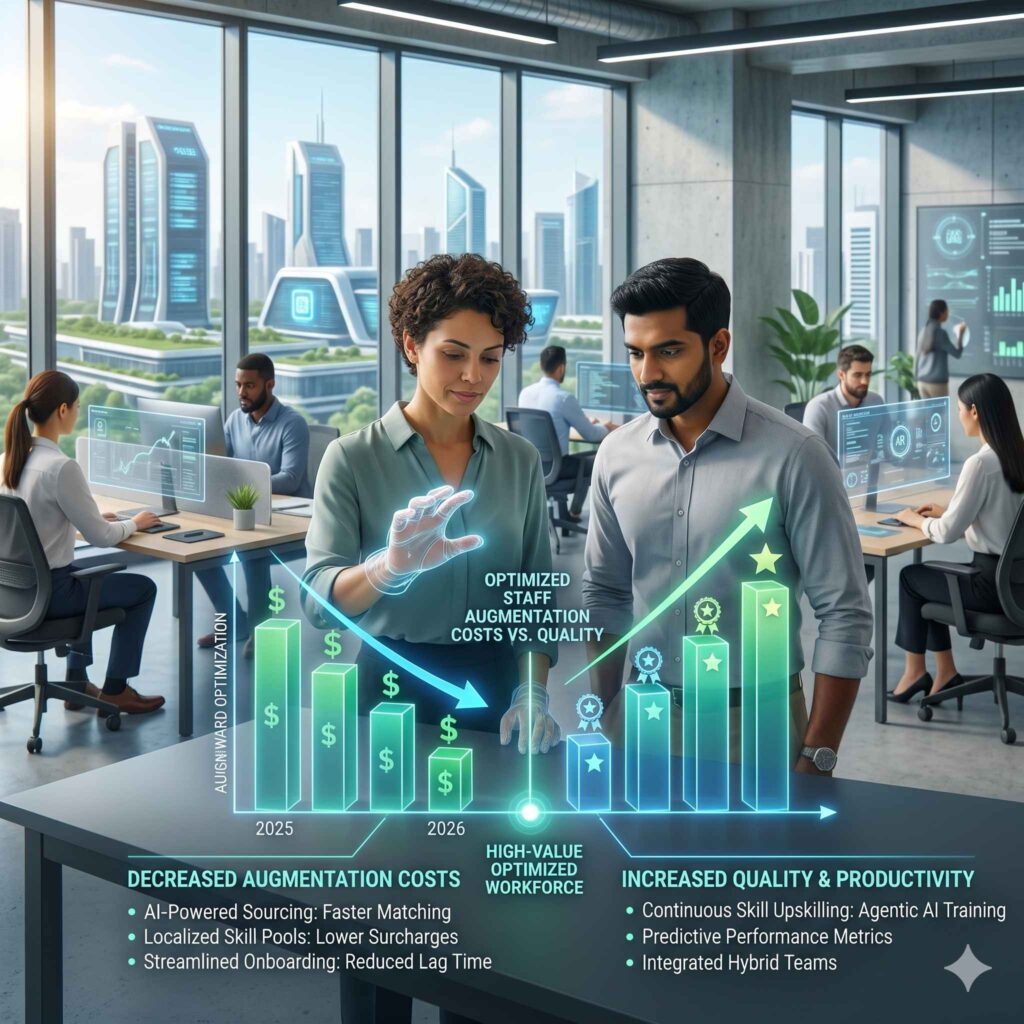


How to Reduce IT Staff Augmentation Costs Without Sacrificing Quality in 2026

Let’s face it: managing IT budgets feels like a never-ending tightrope walk. You need top-tier talent to drive innovation and keep your systems humming, but the costs of IT staff augmentation can quickly spiral. As we look ahead to 2026, with evolving tech landscapes, economic shifts, and a highly competitive talent market, the challenge intensifies.
But here’s the good news: you don’t have to choose between your budget and your project’s success. It is possible to significantly reduce IT staff augmentation costs while maintaining, or even improving, the quality of deliverables. It just requires a smarter, more strategic approach.
Understanding the Landscape of IT Staff Augmentation in 2026
Before we dive into solutions, let’s quickly frame what 2026 might look like for IT staff augmentation:
- Heightened Demand for Specialized Skills: AI, machine learning, advanced cybersecurity, cloud-native development, and data science will continue to be hot commodities, driving up rates for these niche experts.
- Maturity of Remote and Hybrid Models: The “new normal” is just normal now. Companies are better equipped to manage distributed teams, opening up global talent pools but also increasing competition for the best remote workers.
- Economic Pressures & Budget Scrutiny: Inflationary pressures and a focus on efficiency will likely mean even tighter budget controls, making cost optimization more critical than ever.
- AI and Automation as Enablers: AI tools won’t just be for the augmented staff; they’ll be integrated into how you manage and leverage that staff, impacting efficiency and skill requirements.
Strategic Approaches to Cost Reduction
Reducing costs isn’t about cutting corners; it’s about optimizing every step of your augmentation strategy.
1. Smart Skill Matching and Scoping
The biggest cost driver is often over-hiring or mis-hiring.
- Precisely Define Needs: Before you even think about engaging external talent, get crystal clear on the exact skills, experience level, and duration required. Avoid vague “we need a developer” requests.
- Avoid “Gold-Plating”: Does every task truly require a senior architect with 20 years of experience? Sometimes, a mid-level engineer with focused expertise is perfectly adequate, and significantly more cost-effective, especially for well-defined tasks.
- Focus on Outcomes, Not Just Hours: Shift your mindset from buying hours to achieving specific project outcomes. This encourages efficiency from your augmented team.
- Leverage Tiered Talent: Consider a blended approach where senior augmented staff provides architectural guidance and oversight, while junior or mid-level talent handles specific development or support tasks under their mentorship.
2. Embrace Hybrid Models and Global Talent Pools
The world is your talent oyster. Don’t limit yourself to local, high-cost markets.
- Strategic Blending (Onshore/Nearshore/Offshore): A purely onshore model is often the most expensive. Explore nearshore (e.g., Latin America for North America, Eastern Europe for Western Europe) or offshore (e.g., Asia) options for roles where time zone differences or cultural nuances are less critical. A hybrid approach often yields the best balance of cost and collaboration.
- Access Diverse Skill Sets: Global talent pools not only offer competitive rates but also provide access to a wider range of specialized skills that might be scarce locally.
- Invest in Seamless Collaboration Tools: For hybrid models to work, robust project management software, video conferencing, and communication platforms are non-negotiable. This ensures quality isn’t compromised by distance.
3. Leverage Automation and AI Tools
2026 will see AI play a transformative role in IT. Use it to your advantage.
- Automate Repetitive Tasks: Identify tasks that augmented staff currently perform that could be automated. This frees them up for higher-value work, effectively getting more bang for your buck.
- AI-Assisted Development & Testing: Tools for AI-driven code generation, automated testing, and even intelligent debugging can significantly accelerate development cycles, reducing the number of hours required from augmented staff.
- AI for Project Management: AI can help predict project risks, optimize resource allocation, and even assist with documentation, making your augmented team more efficient.
4. Optimize Contract Terms and Vendor Relationships
Your agreements with augmentation partners are crucial for cost control.
- Negotiate Flexible Contracts: Move beyond simple hourly rate agreements. Explore project-based pricing, milestone-based payments, or even performance-based incentives that align vendor success with your project outcomes.
- Foster Long-Term Partnerships: Building strong, long-term relationships with a few trusted vendors can lead to better rates, deeper understanding of your business, and more seamless team integration over time. They become an extension of your team, rather than just a transactional service.
- Regular Review and Benchmarking: Don’t set and forget. Periodically review vendor performance, compare rates with market benchmarks, and don’t hesitate to renegotiate terms to ensure you’re getting competitive value.
5. Focus on Knowledge Transfer and Internal Upskilling
Reduce your long-term dependency on external staff by strengthening your internal capabilities.
- Structured Knowledge Transfer Plans: When augmenting for critical projects, build knowledge transfer into the contract. Ensure augmented staff documents processes, shares expertise, and trains internal teams.
- Internal Mentorship and Upskilling: Use the expertise of augmented staff to mentor your internal team members, helping them develop new skills and reduce the need for future augmentation in those areas.
- Build a Robust Knowledge Base: Encourage augmented staff to contribute to your internal documentation and knowledge base, creating a lasting asset even after they depart.
Maintaining Quality While Cutting Costs
Cost reduction should never mean a drop in quality. Here’s how to ensure excellence persists.
1. Clear Communication and Expectations
Ambiguity is the enemy of quality (and budget).
- Detailed Statements of Work (SOWs): A clear, comprehensive SOW outlining deliverables, timelines, acceptance criteria, and communication protocols is non-negotiable.
- Regular Check-ins and Feedback Loops: Establish frequent communication channels and feedback mechanisms. Don’t wait until the project is off track to address issues.
- Define Success Metrics: What does “done” and “high quality” look like? Agree on measurable KPIs from the outset.
2. Robust Onboarding and Integration
Augmented staff perform best when they feel like part of the team.
- Comprehensive Onboarding: Provide augmented staff with all necessary access, tools, documentation, and introductions to key stakeholders.
- Cultural Integration: Foster an environment where external staff feel integrated and valued, promoting better collaboration and commitment.
3. Performance Monitoring and Feedback
Proactive management helps catch issues early.
- Implement KPIs: Track key performance indicators relevant to the project and individual contributions.
- Regular Performance Reviews: Conduct periodic reviews to provide constructive feedback and ensure alignment with project goals.
- Focus on Deliverables: Evaluate performance based on tangible deliverables and their impact, not just hours worked.
4. Invest in the Right Tools and Technologies
The right infrastructure empowers quality work.
- Collaboration Platforms: Tools like Slack, Microsoft Teams, or dedicated project communication platforms are essential for real-time collaboration.
- Project Management Software: Jira, Asana, Trello, or similar tools ensure transparency, task tracking, and efficient workflow.
- Secure Access and Development Environments: Provide augmented staff with secure, efficient access to necessary systems and development environments to prevent delays and ensure data integrity.
Pitfalls to Avoid
- The “Cheapest Option” Trap: Going solely for the lowest hourly rate often leads to rework, missed deadlines, and ultimately higher overall costs. Prioritize value, not just price.
- Poor Communication: Lack of clear, consistent communication is a primary cause of project failure and quality issues.
- Scope Creep Without Adjustment: Allowing project scope to expand without adjusting timelines, resources, or budget will inevitably lead to overspending or compromised quality.
- Neglecting Knowledge Transfer: Failing to capture knowledge from augmented staff creates a dependency that can be costly in the long run.
Conclusion
Reducing IT staff augmentation costs in 2026 without sacrificing quality isn’t just a pipe dream; it’s a strategic imperative. By implementing smart skill matching, embracing global talent, leveraging AI, optimizing vendor relationships, and focusing on knowledge transfer, you can build a lean, efficient, and highly effective augmented IT team. The key is proactive planning, clear communication, and a commitment to strategic partnerships. Start laying the groundwork now, and your budget (and your projects) will thank you.