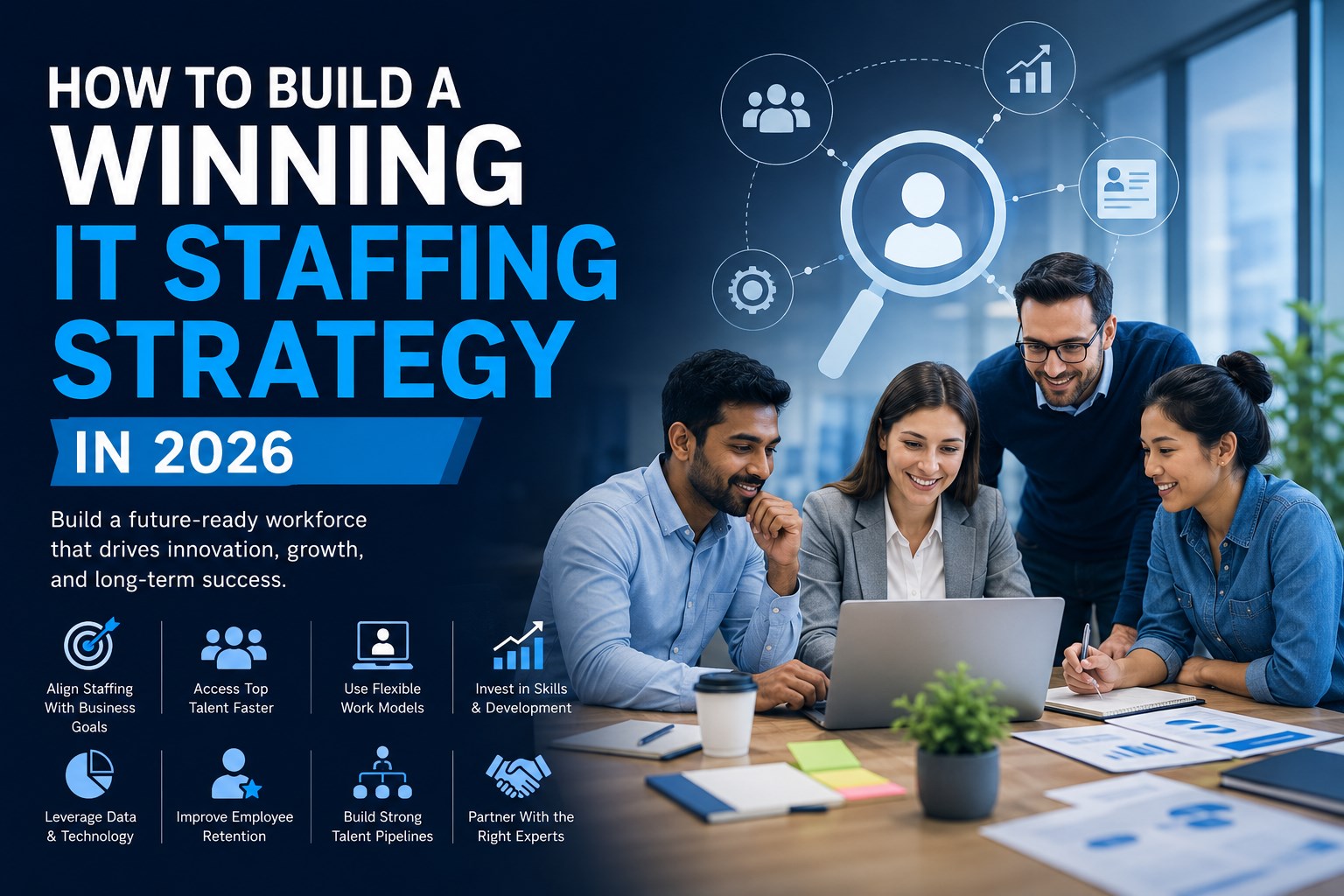
How to Build a Winning IT Staffing Strategy in 2026
The year 2026 might seem a little way off, but in the fast-paced world of technology, it’s practically tomorrow. The IT talent landscape is constantly evolving, driven by rapid technological advancements, shifting work preferences, and an ever-present demand for specialized skills. If your organization wants to stay competitive, innovate, and achieve its strategic goals, simply reacting to staffing needs won’t cut it. You need a proactive, forward-thinking IT staffing strategy that’s built for the future.
So, how do you move beyond just filling roles and start building a truly winning team for 2026 and beyond? Let’s dive in.
Why 2026 Demands a New Approach to IT Staffing
Forget what worked five years ago. The IT staffing challenges of 2026 will be shaped by several factors: the continued rise of AI and automation, a persistent skills gap in critical areas like cybersecurity and cloud engineering, increased global competition for talent, and a workforce that values flexibility and purpose more than ever. Your strategy needs to be agile, data-driven, and people-centric.
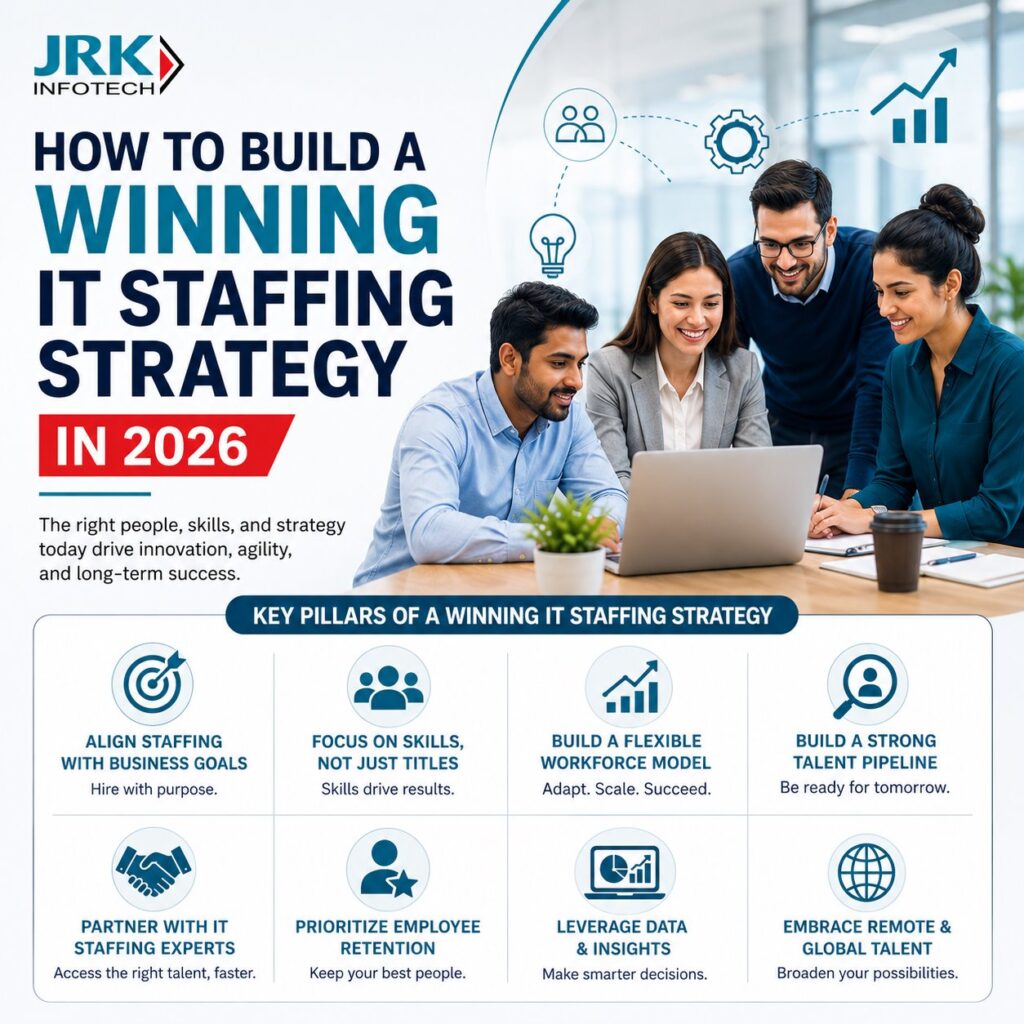
Key Pillars of a Winning IT Staffing Strategy for 2026
Building a robust strategy requires focusing on several interconnected areas. Here are the core pillars you need to construct:
1. Proactive Talent Intelligence & Forecasting
You can’t plan for the future if you don’t understand it. A winning strategy starts with deep insights into the market.
Understanding Future Skill Needs
Which technologies will be critical in 2026? What new roles will emerge? Work closely with your engineering, product, and leadership teams to map out future skill requirements. Think about emerging tech like quantum computing, advanced AI/ML, Web3, and specialized cybersecurity needs.
Leveraging Data Analytics
Move beyond gut feelings. Utilize data from your ATS, HRIS, market reports, and even social media to identify talent trends, predict skill shortages, and understand compensation benchmarks. This data will inform your hiring priorities and budget allocations.
2. Embrace Hybrid & Remote-First Work Models
The pandemic accelerated a shift that’s here to stay. Limiting your talent search to a geographical radius is a surefire way to lose out on top talent.
Global Talent Pools
Open your mind (and your job descriptions) to a global workforce. Remote work allows you to tap into diverse talent pools, potentially reducing costs and definitely increasing your access to specialized skills.
Optimizing Remote Onboarding & Engagement
Hiring remotely is only half the battle. Invest in robust remote onboarding programs, foster a strong virtual company culture, and provide the tools and support needed for remote teams to thrive and feel connected.
3. Focus on Upskilling & Reskilling Existing Talent
The most sustainable talent strategy isn’t just about external hiring; it’s about nurturing the talent you already have.
Internal Mobility Programs
Create clear pathways for employees to grow within the organization. Encourage internal transfers to new departments or roles that align with future skill needs. This boosts morale, retains institutional knowledge, and reduces recruitment costs.
Partnerships for Learning & Development
Collaborate with online learning platforms, universities, or specialized training providers to offer employees cutting-edge courses and certifications. Invest in their growth, and they’ll invest in your company’s future.
4. Enhance Candidate Experience & Employer Branding
In a competitive market, candidates are consumers. Their experience with your company, from application to offer, is paramount.
Personalized Recruitment Journeys
Tailor your communication and interview process. Make candidates feel valued, informed, and excited about the prospect of joining your team. Speed and transparency are key.
Showcasing Your Culture
Your employer brand is your reputation. Highlight your company’s values, mission, work-life balance initiatives, and commitment to diversity and inclusion. Use social media, employee testimonials, and career pages to tell your story authentically.
5. Leverage AI and Automation in Recruitment
Technology isn’t just for your product; it’s for your people operations too. AI and automation can streamline processes and free up your recruiters for more strategic work.
Streamlining Sourcing & Screening
Utilize AI-powered tools for resume screening, candidate matching, and even initial chatbot interactions. This can significantly reduce time-to-hire and ensure you don’t miss qualified candidates.
AI for Predictive Analytics
Beyond just screening, AI can help predict which candidates are most likely to succeed in a role, identify flight risks, and even analyze market trends to inform your strategy.
6. Build Strong Vendor Partnerships (Staffing Agencies)
You don’t have to go it alone. Strategic partnerships with IT staffing agencies can be a significant advantage.
Strategic Alliances, Not Just Transactions
View staffing agencies as an extension of your talent acquisition team. Work with partners who understand your company culture, long-term goals, and specific technology stacks.
Clear Communication & KPIs
Establish clear communication channels and define key performance indicators (KPIs) for your agency partners. This ensures alignment and helps measure the effectiveness of their contributions to your overall strategy.
Measuring Success and Adapting Your Strategy
A winning strategy isn’t static. You need to continuously monitor its effectiveness and be prepared to pivot.
Key Metrics to Track
Beyond time-to-hire and cost-per-hire, consider metrics like candidate satisfaction, retention rates of new hires, internal mobility rates, and the diversity of your talent pipeline.
Agility is Key
The tech landscape will continue to evolve rapidly. Regularly review your strategy (quarterly or bi-annually) and make adjustments based on market shifts, internal needs, and the success of your current initiatives.
Frequently Asked Questions (FAQ)
What is an IT staffing strategy?
An IT staffing strategy is a structured plan that helps organizations identify, hire, manage, and retain the technology talent needed to achieve business goals. It includes workforce planning, recruitment, talent development, and retention initiatives.
Why is an IT staffing strategy important in 2026?
Technology is evolving rapidly, and businesses need specialized skills to stay competitive. A strong IT staffing strategy helps organizations hire faster, address skill gaps, improve workforce flexibility, and support digital transformation initiatives.
What are the key components of a successful IT staffing strategy?
A successful IT staffing strategy typically includes:
- Workforce planning
- Skills gap analysis
- Talent acquisition
- Employee retention
- Staff augmentation
- Upskilling and reskilling
- Workforce analytics
- Succession planning
How can companies overcome IT talent shortages?
Businesses can address talent shortages by expanding their hiring channels, partnering with IT staffing firms, embracing remote hiring, investing in employee training, and using staff augmentation to access specialized skills quickly.
What is IT staff augmentation?
IT staff augmentation is a hiring model where businesses temporarily add skilled IT professionals to their existing teams. These professionals work under the company’s management and help fill skill gaps or support project demands.
How does remote hiring improve IT staffing?
Remote hiring allows companies to access a broader talent pool beyond their local area. This helps organizations find specialized skills faster while improving workforce flexibility and scalability.
What skills are most in demand for IT hiring in 2026?
Some of the most sought-after IT skills include:
- Artificial Intelligence (AI)
- Machine Learning
- Cloud Computing
- Cybersecurity
- DevOps
- Data Engineering
- Full-Stack Development
- Automation Technologies
How can businesses reduce IT hiring costs?
Organizations can reduce hiring costs by improving workforce planning, leveraging staff augmentation, building talent pipelines, using recruitment technology, and investing in employee retention programs.
What role do IT staffing companies play in workforce planning?
IT staffing companies help businesses access pre-screened professionals, reduce recruitment timelines, fill specialized roles, and scale teams quickly based on project requirements.
How can companies improve employee retention in the IT sector?
Businesses can improve retention by offering competitive salaries, flexible work arrangements, career development opportunities, continuous learning programs, and a positive work environment.
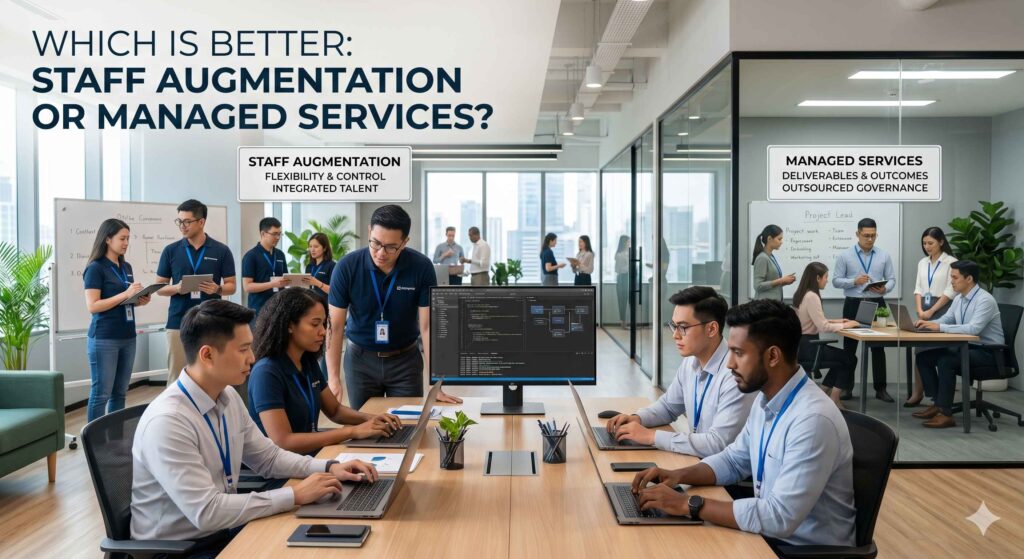
What is the difference between staff augmentation and managed services?
Staff augmentation provides skilled professionals who work under the company’s management, while managed services involve outsourcing an entire function or project to a service provider responsible for delivering outcomes.
What is the future of IT staffing?
The future of IT staffing is centered around flexible workforce models, skills-based hiring, AI-driven recruitment, remote talent acquisition, and continuous workforce development. Companies that adopt these strategies will be better positioned for long-term growth and innovation.