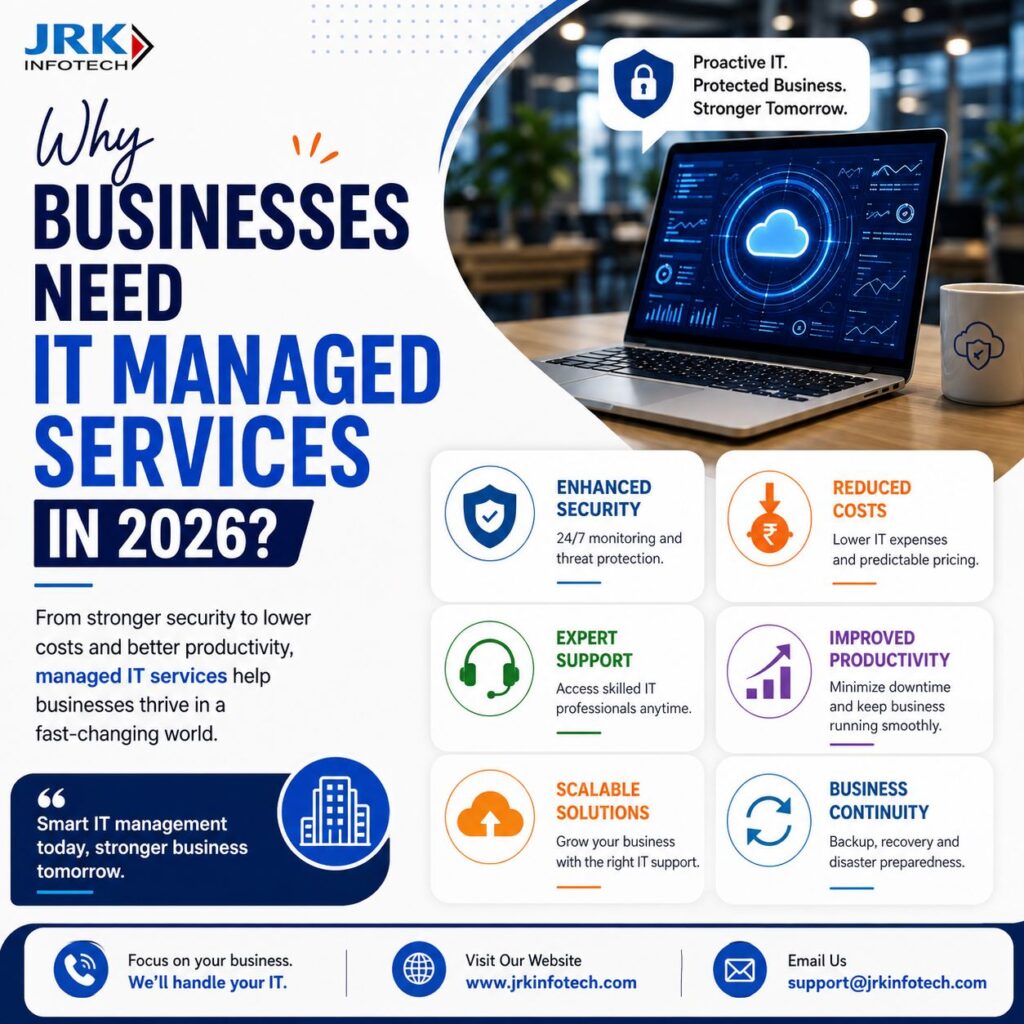

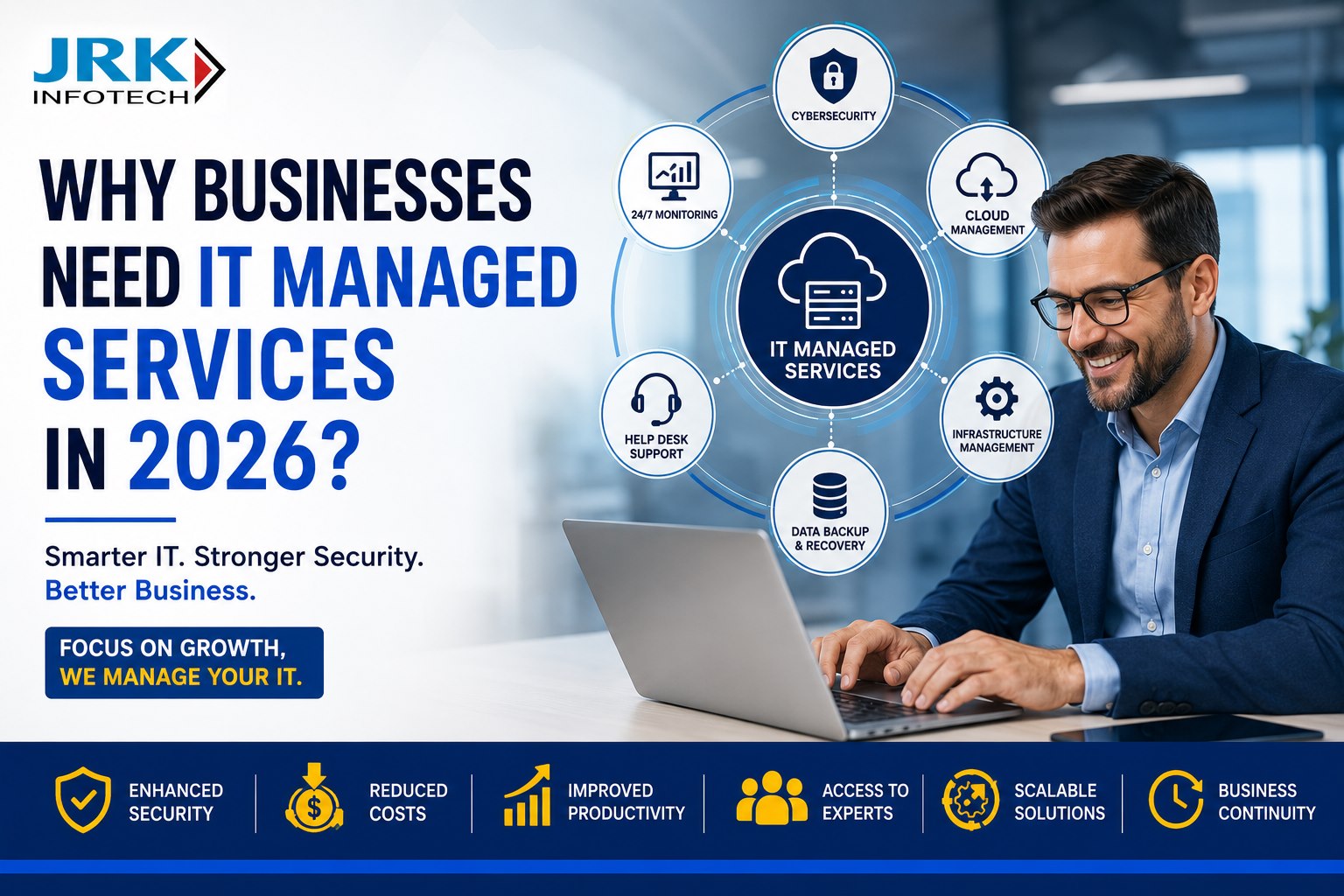
Why Businesses Need IT Managed Services in 2026
Technology has become the backbone of modern business operations. From cloud computing and cybersecurity to remote work and digital transformation, organizations rely heavily on IT systems to stay productive and competitive.
However, managing complex IT infrastructure internally can be expensive, time-consuming, and challenging especially as technology continues to evolve. This is why more businesses are turning to IT Managed Services in 2026.
By partnering with a Managed Service Provider (MSP), companies can access expert IT support, strengthen security, reduce operational costs, and focus on their core business objectives.
What IT Managed Services Actually Are
Before getting into the why, it is worth being clear on the what.
IT managed services means outsourcing the ongoing management and operation of your technology infrastructure networks, servers, cloud environments, cybersecurity, helpdesk support, data backup to a third-party provider called a Managed Service Provider, or MSP. You pay a predictable monthly fee and the MSP keeps everything running to agreed service levels.
This is not the same as calling an IT consultant when something breaks. Managed services is proactive, not reactive. The MSP monitors your systems around the clock, identifies issues before they become problems, applies updates and patches, and responds to incidents often resolving them before you even know they happened.
Think of it as the difference between waiting until your car breaks down and having a dedicated mechanic who services it regularly, monitors the engine, and calls you when something needs attention. One is reactive and expensive. The other keeps you moving.
The Business Environment That Made Managed Services Essential in 2026
Here is the honest context. Running your own IT in 2026 is harder than it has ever been.
The technology stack that even a small business needs to operate has grown enormously in complexity. You are managing cloud environments, remote endpoints, SaaS applications, compliance requirements, cybersecurity threats, and a workforce that may be spread across multiple locations. A few years ago, a small internal IT team could reasonably handle all of that. Today, it is a full-time job for a team of specialists not a generalist.
At the same time, the threat landscape has never been more dangerous. Cybercriminals are not just targeting banks and governments anymore. Small businesses are being targeted at nearly four times the rate of larger organisations, because they tend to have weaker defences and less sophisticated incident response. A single breach can cost a small business more than it earns in a year.
And then there is the talent problem. Skilled IT and cybersecurity professionals are in short supply globally, with around 45% of IT service providers reporting that they cannot meet security requirements because of talent shortages. Hiring and retaining good IT people is expensive, competitive, and time-consuming and in many markets, simply not realistic for a business that is not a technology company.
Managed services solves all three of these problems simultaneously.
7 Reasons Businesses Need IT Managed Services in 2026
1. Predictable Costs Replace Unpredictable Crises
One of the most underappreciated benefits of managed services is what it does to your IT budget. With an in-house team or a break-fix support model, IT costs are lumpy and unpredictable. A server failure, a security incident, or an emergency upgrade can arrive as a sudden and expensive shock at the worst possible moment.
Managed services converts that unpredictability into a fixed monthly fee. You know exactly what you are spending on IT every month, you can plan around it, and you are not exposed to the financial shock of an unplanned crisis. For businesses that operate on tight margins, that predictability alone can be transformative.
2. Access to Expertise That Would Be Impossible to Hire
An MSP does not give you one IT generalist. It gives you a team of specialists network engineers, cybersecurity analysts, cloud architects, helpdesk technicians for a fraction of what it would cost to hire even one of them full-time.
Research consistently shows that 61% of small and medium businesses say they need more technical expertise than they currently have internally. Managed services closes that gap immediately, without the cost, time, or risk of hiring.
3. Cybersecurity That Actually Keeps Pace with Threats
Cybersecurity is the fastest-growing segment of the managed services market, expanding at nearly double the overall market rate and for good reason. The threats are evolving faster than most internal IT teams can track.
Modern MSPs offer managed detection and response, advanced threat monitoring, security awareness training, compliance management, and AI-enabled threat detection. In 2026, 56% of MSPs are using AI to detect and predict cyberthreats — capabilities that would require a specialist security operations team to replicate internally.
For most businesses, the honest alternative to outsourcing cybersecurity is being under-protected. That is not a reasonable position in an environment where ransomware, phishing, and supply chain attacks are increasingly sophisticated and increasingly common.
4. Proactive Maintenance Means Fewer Disruptions
The break-fix model where you call IT support after something has already gone wrong is fundamentally misaligned with how businesses operate. Downtime costs money. Every hour your systems are unavailable, your team is unproductive, your customers are frustrated, and your revenue is at risk.
Managed services flips this model. Your MSP monitors your systems continuously, identifies issues early, applies patches and updates on a scheduled basis, and resolves problems proactively. AI-driven monitoring and predictive analytics now used by half of all MSPs have reduced ticket resolution times by 40–70% compared to traditional reactive support models.
The result is fewer disruptions, more uptime, and a technology environment that supports your business instead of holding it back.
5. Scalability Without the Overhead
Business needs change. You might open a new office, onboard fifty new employees, launch a new product, or expand into a new market. With a traditional IT setup, every one of those changes requires planning, procurement, implementation, and often additional headcount.
With managed services, scaling is straightforward. You work with your MSP to adjust your service scope, and they handle the rest. No emergency hiring, no capital expenditure, no delays while new infrastructure is procured and configured.
This agility is particularly valuable for fast-growing businesses where the pace of change makes long-term technology planning difficult.
6. Compliance Without the Complexity
Regulatory compliance has become one of the most demanding aspects of running a technology environment. GDPR, ISO 27001, SOC 2, HIPAA, PCI-DSS depending on your industry and geography, the compliance obligations can be extensive, complex, and constantly evolving.
Managed service providers handle compliance as a core part of their service. They understand the regulatory landscape, implement the right controls, maintain the necessary documentation, and keep your environment audit-ready. Cybersecurity spending now accounts for over 30% of managed service contracts much of it driven by compliance requirements because businesses have learned that managing compliance in-house is both risky and expensive.
7. Your Internal Team Can Focus on What Actually Matters
For businesses that do have internal IT capability, managed services is not necessarily a replacement it can be a complement. By offloading routine infrastructure management, monitoring, and helpdesk support to an MSP, your internal team is freed from the operational noise and can focus on the work that creates genuine business value: product development, digital transformation, data strategy, and technology innovation.
This is one of the most powerful but least-discussed benefits of the managed services model. The businesses that use it most effectively are not the ones that outsourced IT because they had no choice. They are the ones that outsourced the operational layer deliberately, so their internal talent could work on higher-value problems.
What the Numbers Say About Business Satisfaction
The evidence is not just anecdotal. Research consistently shows strong satisfaction and tangible outcomes from managed services adoption.
58% of small and medium businesses report that IT managed services are cost-effective, and 37% say working with an MSP has saved their organisation money directly. 88% of MSP clients report satisfaction with the services they receive a figure that is high even by the standards of professional services. And 91% of companies surveyed plan to increase their use of managed services over the next two years.
These are not the numbers of an industry people are grudgingly tolerating. They reflect a model that is delivering genuine value across a wide range of business types and sizes.
Who Managed Services Is Right For
Managed services is not a universal answer. It works best for specific situations.
Small to mid-sized businesses that lack the budget or scale to build a full internal IT team benefit most directly. The gap between what a lean internal IT person can cover and what a well-resourced MSP can provide is widest at this end of the market.
Growing businesses that need to scale their technology infrastructure without scaling their IT headcount in lockstep find managed services gives them the agility they need.
Regulated industries healthcare, financial services, legal, manufacturing where compliance obligations are heavy and the cost of a breach or audit failure is severe, benefit from the compliance expertise that a specialist MSP brings.
Businesses with a hybrid or remote workforce that need consistent, secure, high-quality IT support across multiple locations and devices find that managed services is often the only realistic way to deliver that at scale.
What to Look for in an IT Managed Services Provider
Not all MSPs are the same. The market is large and varied, ranging from local boutique providers to global platforms. Before signing a contract, there are a few things every business should look at carefully.
Service level agreements (SLAs). What response and resolution times are they committing to? What happens if they miss them? Vague SLAs are a red flag.
Security maturity. What does their cybersecurity capability actually look like? Do they have a security operations centre? What certifications do they hold?
Transparency of reporting. Will you have visibility into what they are doing and how your environment is performing? Good MSPs provide regular, clear reporting without being prompted.
Exit planning. What happens if you want to change providers? A reputable MSP will have a clear, fair transition process. One that makes switching difficult is not a partner it is a trap.
References. Talk to actual clients, not case studies on a website. Ask specifically about how the MSP handled an incident or a challenging period, not just the day-to-day.
The Cost of Waiting
The businesses that have moved to managed services in recent years did not all do so because they had a crisis. Many made the decision proactively, recognising that the complexity and risk of managing their own IT was growing faster than their capacity to manage it.
The businesses that are still waiting often say they will make the switch after a specific project is done, or when the budget improves, or when they have time to evaluate options properly. Meanwhile the threats keep evolving, the technology keeps getting more complex, and the talent market keeps getting tighter.
There is no ideal moment. There is just the moment when you decide that the risk of staying where you are is greater than the effort of making a change.
For a growing number of businesses in 2026, that moment has already arrived.
Frequently Asked Questions
What does IT managed services include? IT managed services typically covers infrastructure monitoring and management, cloud services management, cybersecurity and threat detection, helpdesk and end-user support, data backup and disaster recovery, network management, and compliance support. The exact scope varies by provider and contract.
How much do IT managed services cost? Pricing varies significantly by scope and provider. Most MSPs use a per-user or per-device pricing model, with monthly costs typically ranging from $100 to $250 per user for small to mid-sized businesses. Enterprise agreements are often custom-priced based on complexity and scale.
Is IT managed services suitable for small businesses? Yes small businesses are among the biggest beneficiaries of managed services. The model gives them access to enterprise-grade IT capability and cybersecurity expertise at a predictable monthly cost, without needing to hire a full internal IT team.
What is the difference between managed services and break-fix IT support? Break-fix support is reactive you call someone when something goes wrong and pay for the repair. Managed services is proactive your MSP monitors your environment continuously, prevents issues where possible, and resolves them quickly when they occur. Managed services is typically more cost-effective over time because it reduces the frequency and severity of incidents.
How do I choose the right IT managed services provider? Evaluate providers on their SLA commitments, cybersecurity maturity, reporting transparency, references from similar businesses, and the clarity of their exit and transition process. The right provider will understand your industry, your compliance obligations, and your technology environment not just offer a generic service catalogue.
Can IT managed services replace an internal IT team? For some businesses, yes. For others, managed services complements an internal team by handling routine operational work so internal staff can focus on higher-value technology initiatives. The right model depends on your business size, complexity, and the strategic role of technology in your organisation.
What industries benefit most from IT managed services? Healthcare, financial services, legal, manufacturing, retail, and any industry with significant compliance obligations or data sensitivity tend to benefit most. However, businesses across all sectors benefit from the cost predictability, cybersecurity capability, and operational reliability that managed services provides.
What happens if my managed service provider has an outage or incident? A reputable MSP will have documented incident response procedures, clear SLA commitments around resolution times, and business continuity planning. Before signing any managed services agreement, confirm these procedures in writing and understand exactly what you are entitled to if the provider fails to meet its commitments.