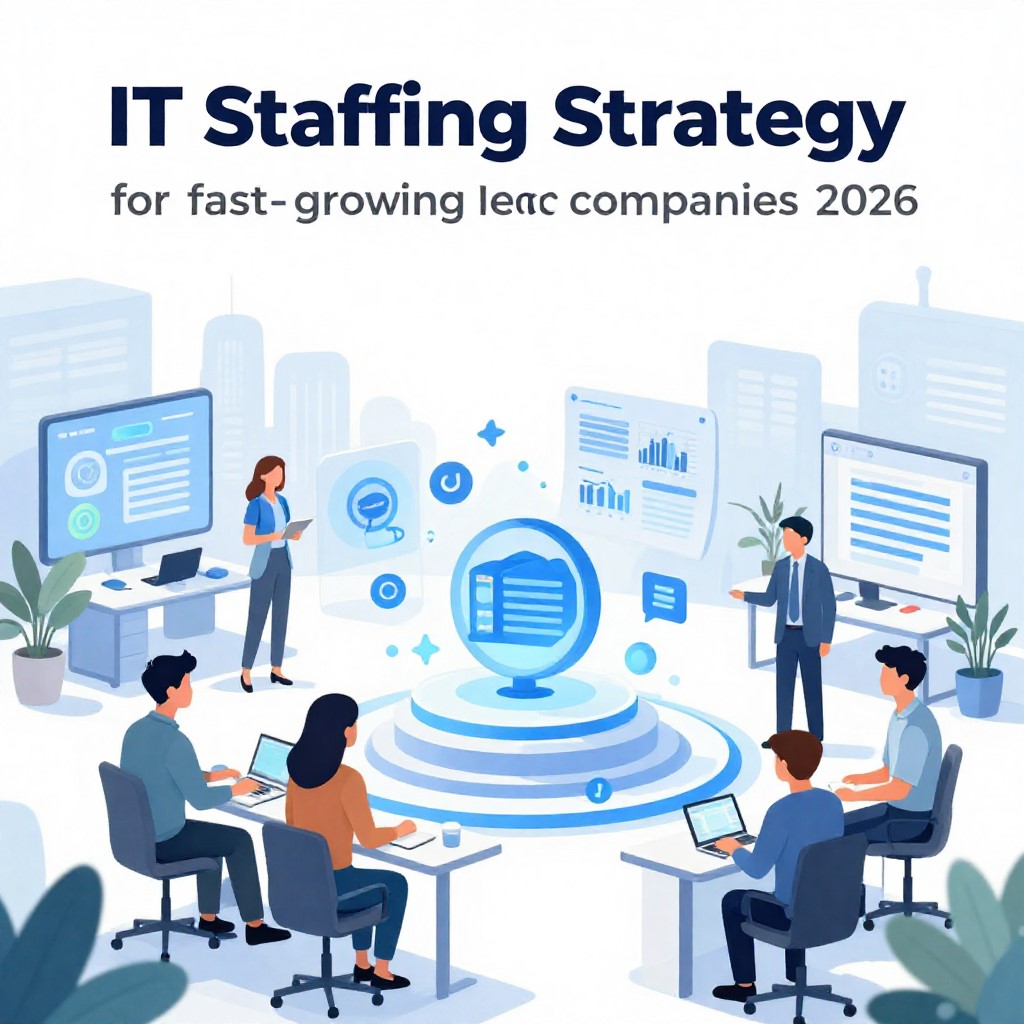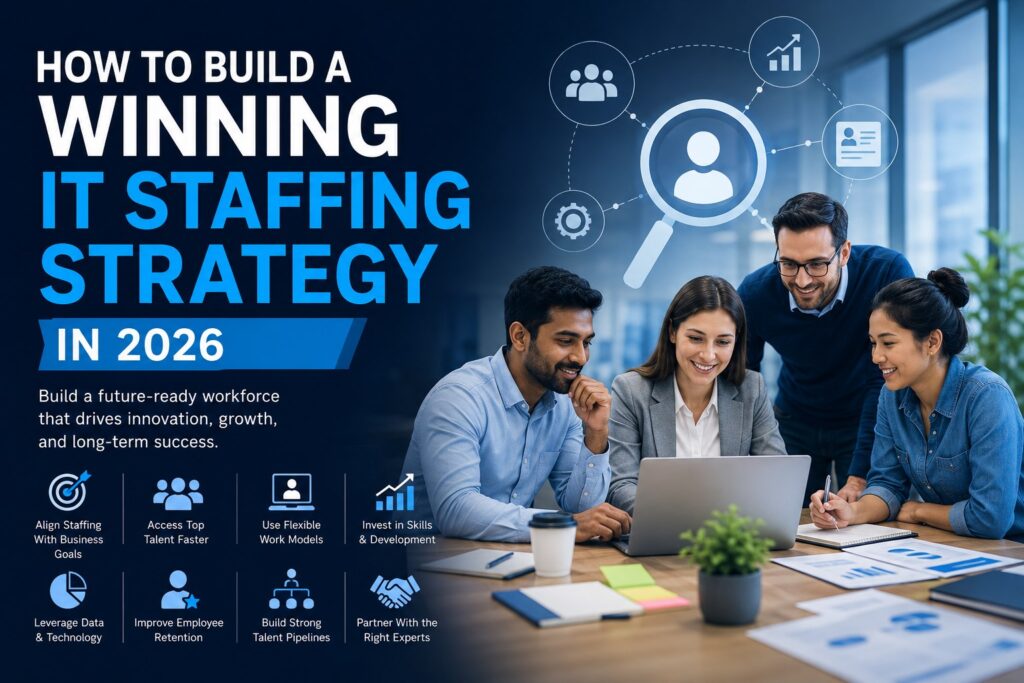
IT Staffing Strategy for Fast-Growing Tech Companies in 2026
The technology industry continues to evolve at an unprecedented pace, making talent acquisition one of the biggest challenges for fast-growing companies. As businesses expand, they need skilled professionals who can drive innovation, support digital transformation, and help maintain a competitive edge. In 2026, an effective IT staffing strategy is no longer just about filling vacancies it is about building a scalable workforce that aligns with long-term business goals.
Whether you’re a startup experiencing rapid growth or an established tech company entering new markets, having the right IT staffing strategy can significantly impact productivity, project delivery, and business success.
Why IT Staffing Matters More Than Ever in 2026
The demand for skilled IT professionals continues to outpace supply. Companies are competing for experts in areas such as:
- Artificial Intelligence (AI)
- Machine Learning (ML)
- Cloud Computing
- Cybersecurity
- Data Engineering
- DevOps
- Software Development
- Automation Testing
- Business Intelligence
As digital transformation accelerates across industries, organizations must adopt agile hiring models that enable them to scale quickly without compromising quality.
Key Challenges Fast-Growing Tech Companies Face
1. Talent Shortages
Finding experienced professionals with specialized technical skills remains a major challenge. The global demand for technology talent has created intense competition among employers.
2. Speed of Hiring
Lengthy recruitment cycles can delay projects and hinder business growth. Companies need faster hiring processes to secure top candidates before competitors do.
3. Workforce Scalability
Rapid growth often creates fluctuating staffing needs. Organizations require flexible workforce models that can adapt to changing project demands.
4. Employee Retention
Attracting talent is only half the battle. Retaining skilled employees has become increasingly important as professionals seek better career opportunities and work-life balance.
Essential IT Staffing Strategies for 2026
1. Adopt a Hybrid Staffing Model
A hybrid staffing approach combines:
- Full-time employees
- Contract professionals
- Remote talent
- Freelance specialists
This model provides flexibility while maintaining operational efficiency. Companies can scale teams quickly for critical projects without committing to permanent headcount increases.
2. Leverage IT Staff Augmentation
IT staff augmentation has become one of the most effective solutions for growing technology businesses.
Benefits include:
- Faster access to specialized skills
- Reduced recruitment costs
- Improved project delivery timelines
- Greater workforce flexibility
- Access to global talent pools
Organizations can quickly onboard experienced developers, cloud engineers, cybersecurity specialists, and project managers based on project requirements.
3. Build a Strong Employer Brand
Top technology professionals evaluate employers based on more than compensation.
Focus on:
- Career development opportunities
- Learning and certification programs
- Flexible work arrangements
- Innovative projects
- Inclusive workplace culture
A strong employer brand helps attract high-quality candidates and improves employee retention.
4. Invest in Workforce Planning
Successful companies proactively identify future skill requirements rather than reacting to immediate hiring needs.
Key workforce planning activities include:
- Skills gap analysis
- Succession planning
- Technology roadmap alignment
- Capacity forecasting
- Resource optimization
Strategic workforce planning ensures organizations remain prepared for future growth.
5. Expand Access to Global Talent
Remote work has transformed hiring practices worldwide. Companies are no longer restricted to local talent markets.
Benefits of global hiring include:
- Access to specialized expertise
- Reduced recruitment timelines
- Cost optimization
- Increased workforce diversity
- 24/7 operational capabilities
Organizations that embrace global talent strategies gain a significant competitive advantage.
6. Prioritize Skills-Based Hiring
Traditional hiring based solely on degrees and certifications is becoming less effective.
Instead, focus on:
- Technical assessments
- Real-world project experience
- Problem-solving abilities
- Communication skills
- Adaptability and learning agility
Skills-based hiring helps companies identify candidates capable of delivering immediate business value.
7. Strengthen Employee Retention Programs
Employee turnover can be costly and disruptive. Retention strategies should include:
- Competitive compensation packages
- Performance incentives
- Continuous learning opportunities
- Leadership development programs
- Employee wellness initiatives
Retaining top performers reduces recruitment costs and preserves institutional knowledge.
The Role of Technology in IT Staffing
Modern recruitment technologies are transforming the hiring process.
Key tools include:
- AI-powered candidate screening
- Recruitment automation platforms
- Applicant Tracking Systems (ATS)
- Predictive workforce analytics
- Skills assessment platforms
These technologies help recruiters identify qualified candidates faster and improve hiring outcomes.
Metrics to Measure IT Staffing Success
To evaluate staffing effectiveness, organizations should track:
- Time-to-hire
- Cost-per-hire
- Employee retention rate
- Offer acceptance rate
- Quality of hire
- Project delivery performance
- Employee engagement scores
Monitoring these metrics enables continuous improvement in recruitment and workforce management.
Future Trends Shaping IT Staffing in 2026
Several trends are expected to influence hiring strategies:
- Increased adoption of AI-assisted recruiting
- Growth of remote-first teams
- Expansion of contract and project-based hiring
- Greater emphasis on cybersecurity talent
- Increased demand for cloud and AI specialists
- Skills-based hiring becoming the industry standard
Organizations that adapt to these trends will be better positioned to attract and retain top technology talent.
Frequently Asked Questions (FAQ)
What is an IT staffing strategy for a fast-growing tech company?
An IT staffing strategy is a structured plan that helps fast-growing companies attract, hire, manage, and retain the right technology talent to support business expansion and project delivery.
Why is IT staffing important for growing tech companies?
A strong IT staffing strategy ensures companies can scale quickly, fill skill gaps, reduce hiring delays, and maintain productivity while supporting rapid business growth.
What are the biggest IT staffing challenges in 2026?
Some of the most common challenges include:
- Shortage of skilled tech talent
- Rising recruitment costs
- High employee turnover
- Competition for specialized skills
- Rapid technology changes
- Longer hiring cycles
How can fast-growing companies scale their IT teams quickly?
Companies can scale faster by:
- Using IT staff augmentation
- Partnering with staffing agencies
- Building talent pipelines
- Hiring remote professionals
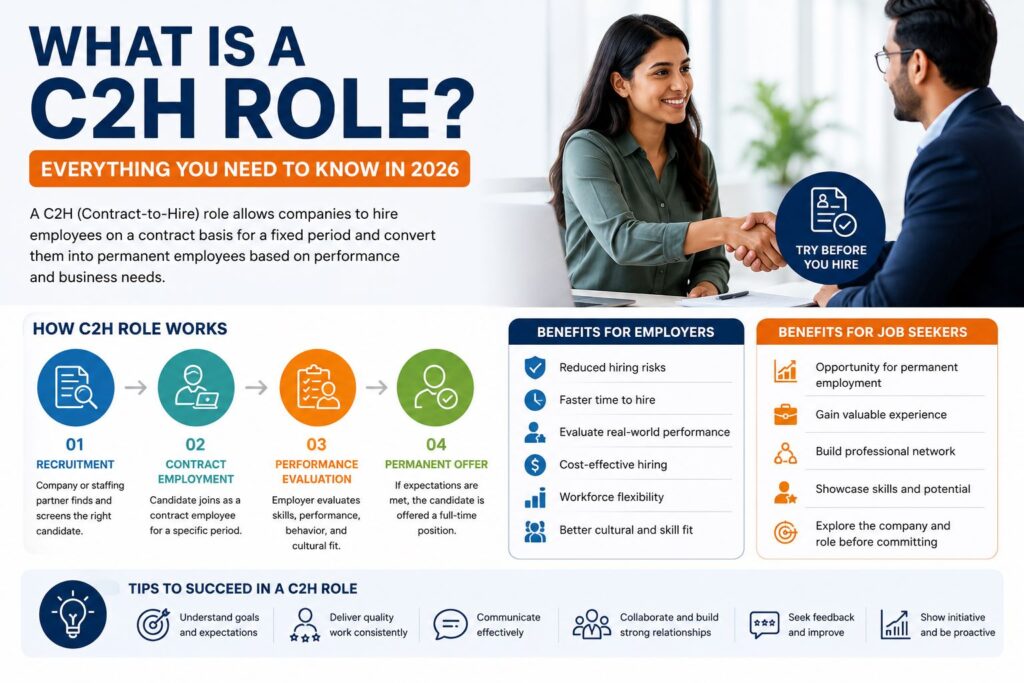
- Leveraging Contract-to-Hire (C2H) models
What is IT staff augmentation?
IT staff augmentation is a hiring model where businesses temporarily add skilled IT professionals to their existing teams to fill talent gaps, support projects, or accelerate growth.
Which hiring model is best for fast-growing tech companies?
There is no one-size-fits-all approach. Most successful companies use a combination of:
- Full-time employees
- Staff augmentation
- Contract professionals
- Contract-to-Hire resources
- Managed services
This hybrid workforce model provides maximum flexibility and scalability.
How does remote hiring benefit tech companies?
Remote hiring allows organizations to access a global talent pool, reduce recruitment timelines, find specialized skills, and improve workforce flexibility.
What IT skills are most in demand in 2026?
The most sought-after skills include:
- Artificial Intelligence (AI)
- Machine Learning
- Cloud Computing
- Cybersecurity
- DevOps
- Data Engineering
- Full-Stack Development
- Automation Technologies
How can companies reduce IT recruitment costs?
Businesses can reduce hiring costs by:
- Building strong talent pipelines
- Improving employee retention
- Using staff augmentation services
- Implementing efficient hiring processes
- Partnering with specialized IT staffing firms
Why is employee retention important in IT staffing?
High turnover can lead to project delays, increased hiring expenses, and productivity losses. Retaining skilled professionals helps maintain stability, reduce costs, and preserve organizational knowledge.
How can technology companies prepare for future workforce needs?
Companies should continuously monitor industry trends, invest in employee upskilling, adopt flexible workforce models, and plan for emerging technologies such as AI, cloud computing, and cybersecurity.
What does the future of IT staffing look like?
The future of IT staffing is centered on flexibility, skills-based hiring, remote work, AI-driven recruitment, staff augmentation, and hybrid workforce models that enable businesses to adapt quickly to changing market demands.