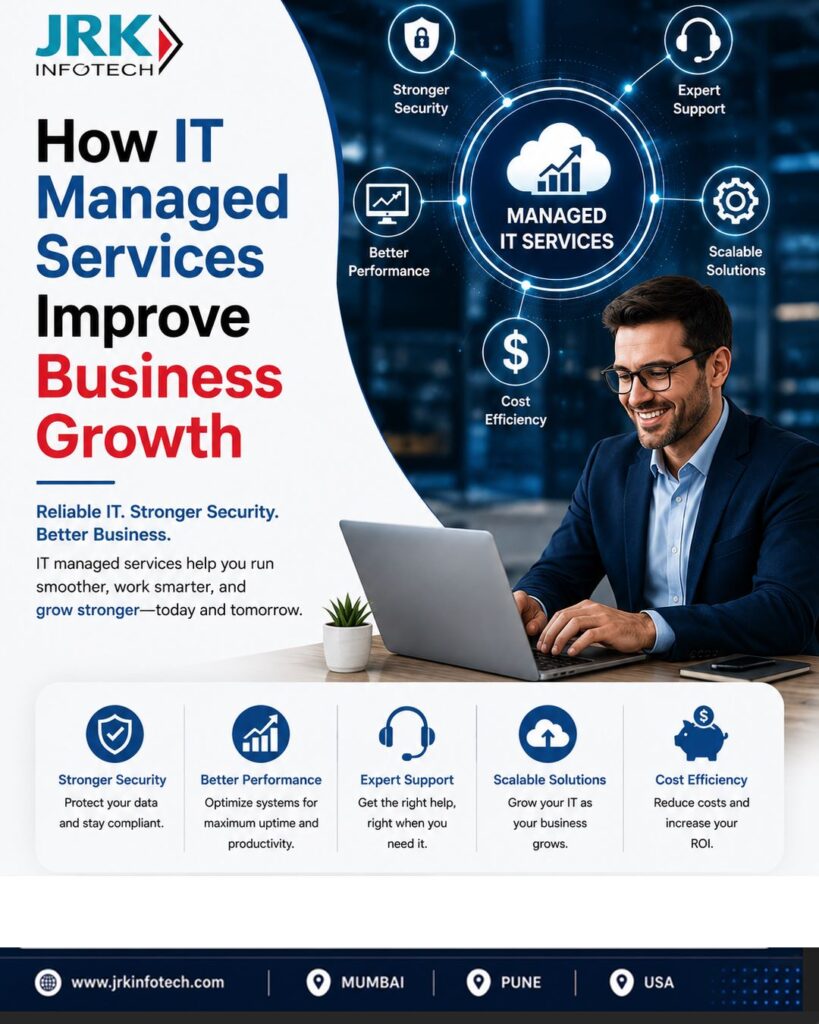
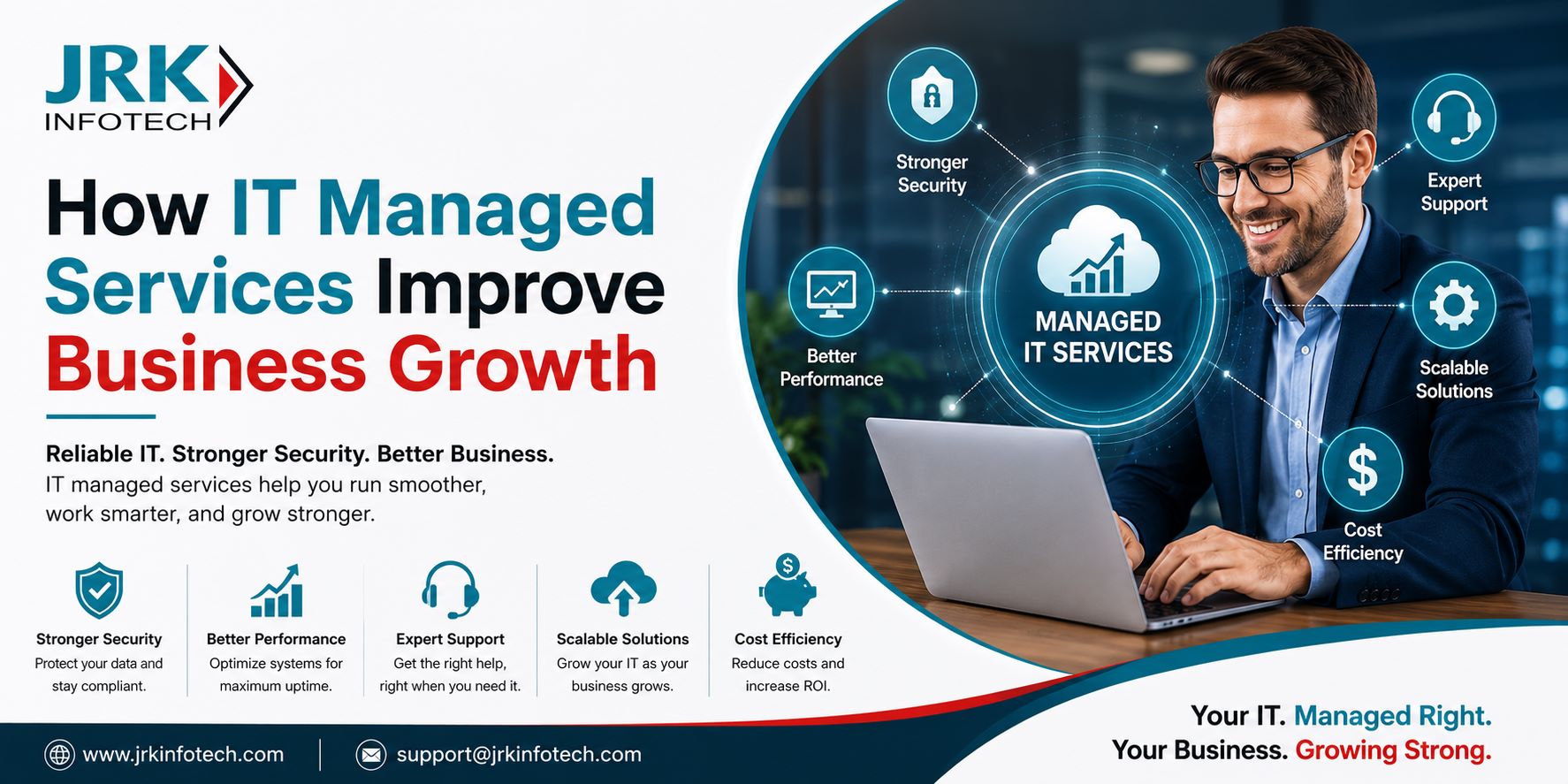
How IT Managed Services Improve Business Growth
Technology is no longer something that simply supports a business in the background. It is part of almost everything a company does. Employees rely on applications and cloud platforms to get their work done, sales teams depend on CRM systems to manage customers, and business leaders need accurate data to make decisions. When everything works properly, nobody thinks much about the IT behind it. But when something goes wrong, the impact can be immediate.
A network outage can stop an entire team from working. A security incident can put sensitive information at risk. Even a small software or hardware problem can consume hours of employee time. For a growing business, these interruptions can become more than technical inconveniences they can affect productivity, customer relationships, operating costs, and growth.
This is where IT Managed Services can make a real difference. Rather than waiting for technology problems to appear and then trying to fix them, businesses can work with a managed services provider to monitor, maintain, secure, and support their IT environment on an ongoing basis. The idea is simple: keep technology reliable enough that the business can concentrate on what it does best.
IT Should Support Growth, Not Get in the Way
Consider a company that has grown from 30 employees to more than 100. The IT setup that worked perfectly well when the business was smaller may now be under considerable pressure. There are more laptops, more applications, more user accounts, more data, more remote employees, and more security concerns.
At this stage, technology can quickly become difficult to manage. The business may need expertise in networking, cloud computing, cybersecurity, backups, software management, and technical support, but hiring a specialist for every area isn’t always realistic.
An experienced IT Managed Services Provider can fill that gap. Instead of building a large internal IT department, the business can access a wider range of technical expertise through an external partner. This gives the company the support it needs without making its workforce structure unnecessarily complicated.
More importantly, it allows business leaders to think about technology as an enabler of growth rather than simply an expense that has to be managed.
Moving From IT Problems to Proactive IT Management
Traditional IT support often begins when something has already gone wrong. An employee can’t access an application, the network stops working, or a device develops a problem, and someone is called in to fix it.
That approach is understandable, but it can become expensive when a business starts depending heavily on technology.
Managed IT Services take a different approach. Instead of focusing entirely on fixing problems after they happen, the technology environment can be monitored and maintained continuously. Software updates can be managed, systems can be checked, potential performance issues can be identified, and security requirements can be reviewed regularly.
This doesn’t mean problems will never happen. No IT environment is completely immune to failures or security threats. The difference is that the business is better prepared and can often identify issues before they become major disruptions.
That proactive approach can have a direct effect on productivity. Employees spend less time waiting for technology problems to be resolved and more time doing the work they were hired to do.
Better IT Doesn’t Have to Mean a Bigger IT Department
One of the biggest challenges for small and mid-sized businesses is access to specialist IT skills.
A company may have one or two internal IT employees who do an excellent job, but expecting those individuals to be experts in every area of modern technology is unrealistic. Cybersecurity, cloud infrastructure, networking, data protection, backup, compliance, and business applications are all specialized areas.
This is where IT Managed Services can complement an internal team.
A managed services provider can bring additional expertise into the picture while the company’s internal employees continue to handle business-specific responsibilities. In some organizations, the provider may manage most of the IT environment. In others, it may focus on specific areas where additional expertise is required.
The advantage is flexibility. The company doesn’t necessarily have to choose between having a large internal IT department and having no technical support at all. It can create a model that fits its actual requirements.
Security Becomes More Important as a Business Grows
Growth also changes a company’s security requirements.
When there are only a few employees working from one office, managing access and devices may be relatively straightforward. As the organization grows, employees may work remotely, use cloud applications, access systems from different locations, and share information with customers and partners.
Every additional system and connection creates another area that needs to be managed carefully.
A good Managed IT Services Company can help businesses take a more structured approach to cybersecurity. Depending on the services provided, this can include endpoint protection, patch management, monitoring, access management, backup, security reviews, and other preventive measures.
The important thing is not to treat cybersecurity as something that only matters after an attack. Security needs to be part of everyday IT management.
For a growing company, that approach can protect not only its systems and information but also the trust it has built with customers.
The Productivity Impact Is Often Bigger Than Expected
It’s easy to calculate the cost of an IT service because it appears as a line item on a budget. It’s much harder to calculate the cost of employees being unable to work.
Imagine ten employees losing two hours because an important business application is unavailable. That’s twenty hours of productivity lost in a single incident. Add similar interruptions throughout the year, and the cost can become significant.
This is one reason Managed IT Support can have a broader business impact than simply resolving technical problems.
When employees have reliable systems and access to responsive technical support, they can spend more time serving customers, completing projects, communicating with colleagues, and generating revenue.
In other words, good IT management isn’t just about computers. It’s about protecting productive working time.
Predictable IT Costs Can Make Planning Easier
Technology expenses can sometimes be difficult to predict. A company may suddenly need new hardware, additional technical expertise, emergency support, security improvements, or infrastructure upgrades.
Those unexpected expenses can make IT budgets difficult to manage.
With a managed services model, many businesses can move toward a more predictable recurring cost structure. The exact pricing depends on the provider, services, infrastructure, and level of support required, but having clearly defined services and responsibilities can make technology planning easier.
This doesn’t necessarily mean managed services will always be cheaper than maintaining an internal IT department. The more important question is whether the business is getting the right level of expertise, reliability, security, and support for the investment it is making.
Managed IT Services Can Make Growth Easier to Manage
Business expansion creates new technology requirements almost automatically.
A company opening another office needs connectivity and secure access. Hiring new employees means more devices and user accounts. Moving applications to the cloud introduces new management and security considerations. Acquiring another business can mean integrating completely different systems.
Without proper planning, these changes can put pressure on an already busy IT team.
An experienced IT Managed Services Provider can help businesses prepare for these changes instead of reacting to them after the fact. Technology requirements can be considered alongside business plans, allowing infrastructure and support processes to evolve as the organization grows.
That is particularly valuable for businesses that expect significant growth over the next few years.
Should You Choose Managed Services or In-House IT?
There isn’t a universal answer.
For some organizations, a strong internal IT department is essential because technology is at the heart of their business. For others, maintaining a large internal team isn’t financially or operationally practical.
Many businesses also choose a combination of the two.
An internal IT team can remain responsible for strategic decisions, business-specific applications, and relationships with key stakeholders, while an external IT Managed Services Provider handles areas such as infrastructure monitoring, cybersecurity, help desk support, cloud management, or backups.
The right model depends on the organization’s size, budget, technical environment, internal expertise, and growth plans.
The real question isn’t whether external IT support is better than internal IT. It’s whether the business has enough expertise and capacity to keep its technology reliable, secure, and ready for what comes next.
Choosing the Right IT Managed Services Provider
The provider you choose can make a significant difference.
Price is obviously important, but it shouldn’t be the only consideration. A provider that offers a low monthly fee but takes hours to respond to critical issues may end up costing the business more through downtime and lost productivity.
Look for a provider that understands your business rather than simply selling a standard package. Ask how they monitor systems, how quickly they respond to problems, how they approach cybersecurity, how they handle backups, and how their services can scale as your business changes.
It’s also worth discussing what happens when something falls outside the standard agreement. Clear expectations around responsibilities, response times, communication, and additional services can prevent problems later.
The best IT Managed Services Provider should feel like an extension of your business—not simply another company you call when something breaks.
The Bigger Picture
The real value of managed IT services isn’t just about keeping servers running or answering support tickets.
It’s about creating a technology environment where employees can work effectively, customers can receive consistent service, and business leaders can make decisions without constantly worrying about whether the underlying systems will support them.
When IT is reliable, secure, and properly managed, the business has more freedom to focus on growth.
That’s ultimately why IT Managed Services can play such an important role in modern business strategy. They allow companies to access technical expertise, improve reliability, strengthen security, control operational complexity, and prepare their technology for future growth.
Frequently Asked Questions
What are IT Managed Services?
IT Managed Services involve the ongoing management, monitoring, maintenance, and support of a company’s IT environment. Depending on the provider, services may include technical support, network management, cloud services, cybersecurity, backup, infrastructure monitoring, and software management.
How do IT Managed Services help business growth?
They help businesses maintain reliable technology while reducing the time and resources spent dealing with recurring IT problems. By improving system reliability, security, support, and scalability, IT Managed Services can allow employees and management to focus more on business priorities.
Are Managed IT Services suitable for small businesses?
Yes. Small and medium-sized businesses often use Managed IT Services because they may not have the resources to employ specialists across every area of IT. A managed services provider can give them access to broader expertise without requiring a large internal technology department.
Can Managed IT Services reduce IT costs?
They can help make IT spending more predictable and may reduce the need to maintain a large internal IT team. However, the actual financial benefit depends on the company’s requirements, existing infrastructure, internal resources, and the services included in the agreement.
What is the difference between IT support and Managed IT Services?
Traditional IT support often focuses on fixing problems when they occur. Managed IT Services generally take a proactive approach by monitoring and maintaining systems continuously, with the goal of preventing or reducing problems before they affect the business.
Do Managed IT Services include cybersecurity?
Many providers include cybersecurity services, although the exact coverage varies. Services may include endpoint protection, security monitoring, patch management, access controls, backups, and security assessments.
How do I choose the right IT Managed Services Provider?
Look at more than the monthly price. Consider technical expertise, response times, security capabilities, scalability, communication, experience, service coverage, and the provider’s understanding of your business. Always review the service agreement carefully before making a decision.
Can Managed IT Services support business expansion?
Yes. A good provider can help businesses prepare their technology as they add employees, locations, applications, cloud services, or new operations. This allows the IT environment to evolve alongside the business rather than becoming a limitation.