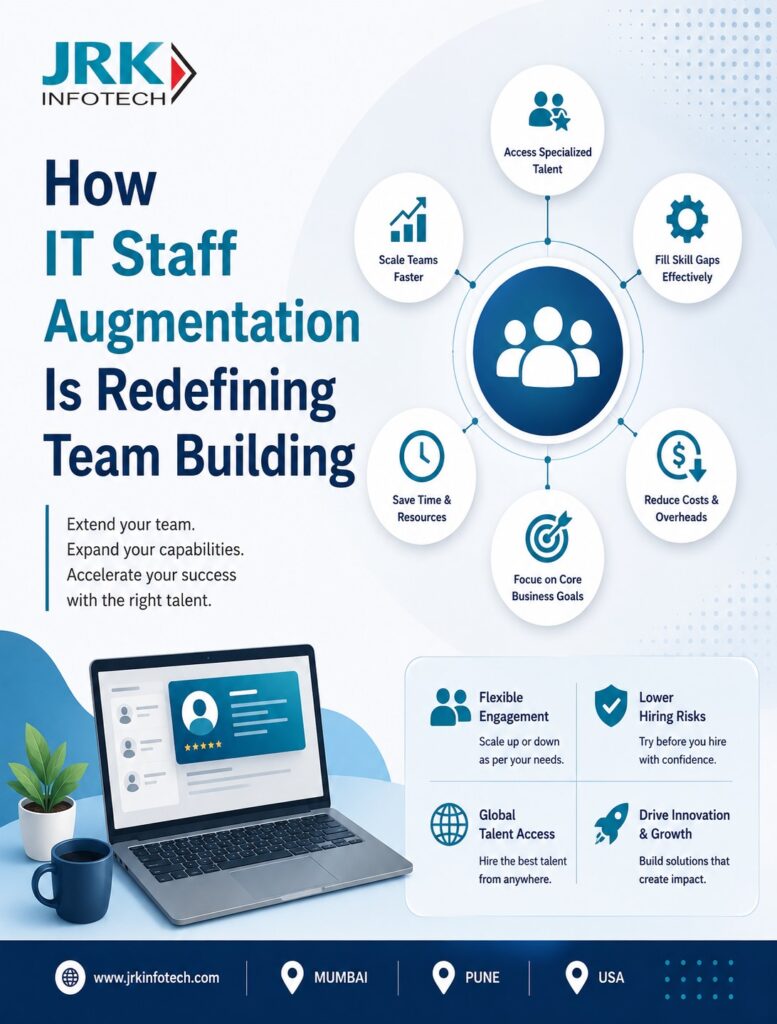
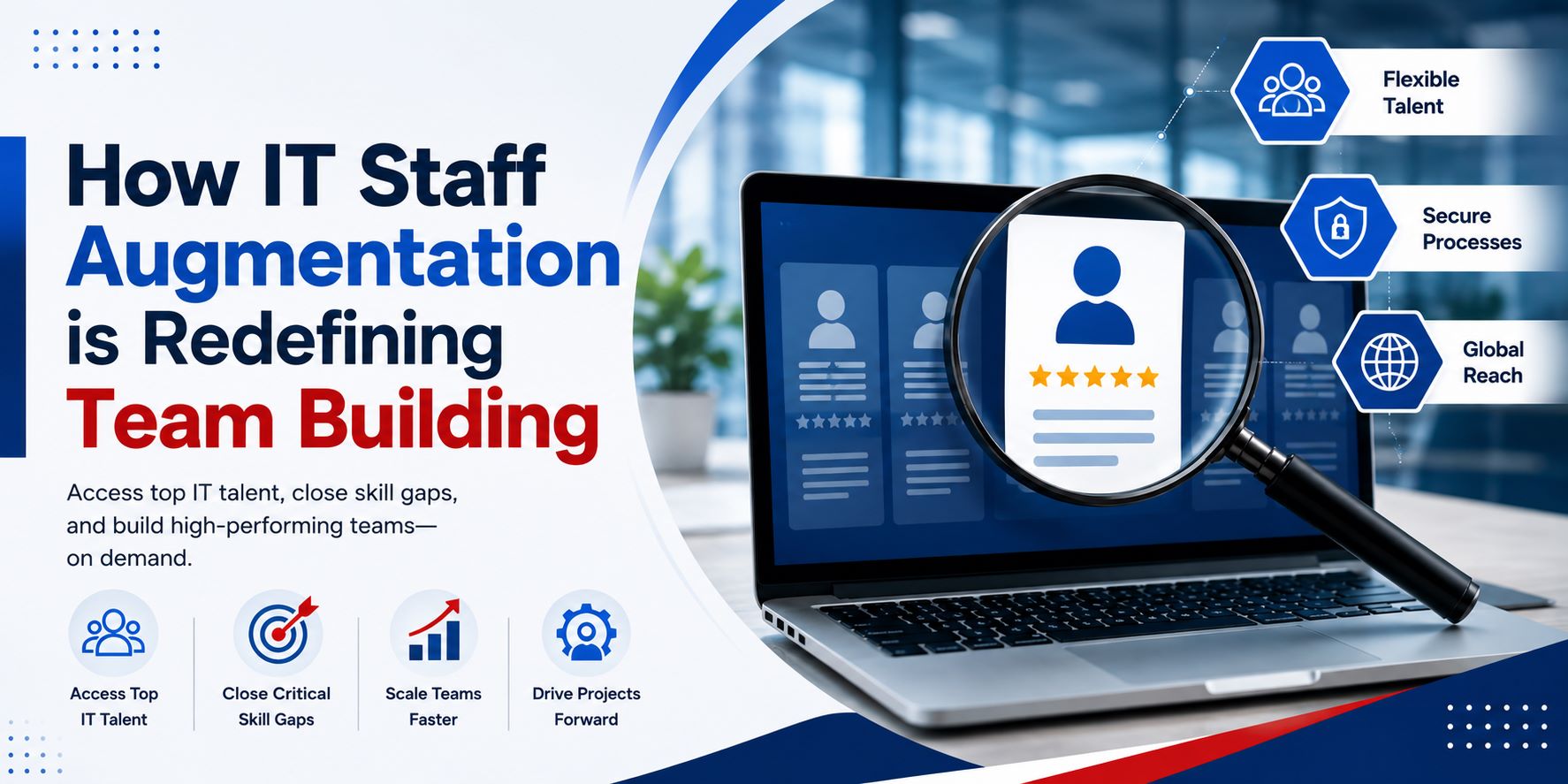
How IT Staff Augmentation is Redefining Team Building
Building an IT team has become less about simply filling open positions and more about having the right skills available when the business actually needs them. Technology projects can change quickly. A company may begin the year focused on software development, move into a cloud migration a few months later, and then need specialists in data, cybersecurity, or AI. Expecting one permanent team to cover every requirement can be difficult and expensive.
This is one reason IT staff augmentation is becoming a more practical part of modern workforce planning. Rather than hiring permanently for every new requirement, businesses can bring experienced professionals into an existing team for a specific project, skill gap, or period of increased demand. Recent industry discussions in 2026 show the model moving beyond simple headcount replacement toward flexible, specialized technology teams.
The important point is that staff augmentation isn’t really about adding more people. It’s about adding the right capabilities at the right time.
The Way Businesses Build IT Teams Is Changing
Traditional hiring still makes sense when a business needs someone for a long-term role. A product manager, technology leader, senior developer, or infrastructure professional who will remain central to the organization can be a valuable permanent addition.
The problem starts when every requirement is treated as a permanent one.
Consider a company preparing to modernize an old application. Its existing team understands the application and the business extremely well, but the project also requires specialists in cloud architecture, DevOps, and application modernization. Hiring all of those professionals permanently may not make sense once the transformation is complete.
With IT staff augmentation services, the company can strengthen its existing team for the duration of the project. The additional professionals work within the company’s processes and alongside its employees rather than operating as a completely separate delivery team. That distinction is important because the business keeps control of its priorities, workflows, and day-to-day project decisions.
This is where the idea of team building starts to change.
It’s No Longer Just About Filling Vacancies
For a long time, recruitment was largely vacancy-driven. A position became available, and the organization looked for someone to fill it.
Today, technology leaders are increasingly thinking in terms of skills and capabilities.
Instead of asking, “Which position do we need to fill?” they are asking, “What does this project require, and what skills are missing from our current team?”
That is a much more flexible way of thinking about workforce planning.
A development team might already have ten people but still need two additional specialists to meet a critical deadline. A company may have a strong internal IT department but lack someone with experience in a particular cloud platform. A business entering an AI initiative may need data engineers and AI specialists before it has enough long-term work to justify permanent positions.
IT staffing solutions can help address these situations without forcing businesses into an all-or-nothing hiring decision.
The Value of Adding Experience to an Existing Team
One of the biggest misunderstandings about IT staff augmentation is that it is simply a way to increase headcount.
In reality, the value often comes from the experience that comes with the additional professionals.
Imagine an internal development team that has spent years maintaining a business application. They understand the users, processes, and technical history, but they haven’t worked extensively with a new cloud architecture.
Bringing in an experienced cloud professional doesn’t mean replacing the internal team. That person can work alongside them, contribute practical knowledge, help solve technical challenges, and potentially transfer some of that knowledge to the permanent employees.
That makes the relationship more valuable than simply adding another person to a project.
The team becomes stronger because it has access to experience it didn’t previously have.
Speed Matters More Than Ever
Technology projects rarely wait patiently for recruitment cycles.
A business may have an important product launch approaching, a customer implementation that has fallen behind schedule, or a digital transformation project that suddenly needs additional technical expertise. Waiting several months to complete a traditional recruitment process can create unnecessary pressure.
This is one of the reasons IT staffing providers have become attractive to organizations that need to scale quickly. Staffing partners can use established talent networks and recruitment processes to identify professionals for specific requirements, potentially reducing some of the time involved in finding suitable candidates. Industry sources in 2026 continue to point to speed, specialized talent access, and workforce flexibility as major reasons businesses use augmentation.
Of course, speed shouldn’t mean lowering the hiring standard. Getting someone quickly is only useful if that person has the technical ability and experience the project actually requires.
Supporting the People You Already Have
There is another side to this conversation that doesn’t get enough attention: your existing employees.
When an IT team is stretched too thin, the consequences aren’t always immediately visible. Deadlines start moving, employees work longer hours, important improvements get postponed, and eventually productivity can suffer.
Adding experienced professionals through IT staff augmentation services can give the internal team room to breathe.
The goal isn’t to take important work away from permanent employees. It is to give them the additional capacity they need to do their jobs properly.
For example, an internal technology team may remain responsible for architecture and business priorities while augmented developers help increase development capacity. A permanent security team may continue managing the organization’s security strategy while a specialist supports a particular implementation.
The arrangement works best when both sides understand their responsibilities from the beginning.
Flexibility Is Becoming a Workforce Advantage
The technology industry is changing quickly, and workforce planning has to keep pace.
AI is one example. As organizations adopt AI, they need people who understand not only AI technologies but also data, cybersecurity, integration, governance, and the business processes surrounding those systems. At the same time, some traditional technology roles are being reshaped by automation. Recent reporting from India also points to companies reassessing workforce structures as AI changes how work is organized.
In this environment, maintaining exactly the same team structure year after year isn’t always practical.
Flexible IT staffing gives companies another option. They can maintain a strong permanent workforce while bringing in specialized skills when a particular business requirement calls for them.
That doesn’t mean every role should become temporary. It means companies can be more deliberate about which capabilities need to remain permanent and which can be added when needed.
Where IT Staff Augmentation Fits Best
Staff augmentation isn’t the answer to every hiring problem.
If a company needs someone to lead a core function for many years, permanent hiring may be the better choice. Likewise, if an organization doesn’t have the internal leadership needed to manage a project, simply adding external developers may not solve the underlying problem.
The model tends to work particularly well when the business already has a capable internal team but needs additional skills or capacity.
It can be useful during software development projects, cloud migrations, application modernization, ERP implementations, cybersecurity initiatives, data projects, and periods of rapid business growth.
The common thread is straightforward: the company knows what it needs, but doesn’t necessarily need those additional skills permanently.
Choosing the Right Staffing Partner Matters
The success of an augmented team depends heavily on the quality of the professionals being brought in.
This is why choosing an IT staffing company shouldn’t be based only on how quickly it can send resumes.
A good partner should take the time to understand the technology stack, project environment, experience level, communication requirements, and expectations of the business. Candidate screening is particularly important because a professional who looks suitable on paper may not have the practical experience required for the role.
Communication matters too. Your staffing partner should understand feedback, respond quickly, and be willing to adjust when your requirements change.
Ultimately, you aren’t just hiring a staffing company. You’re choosing a partner that will influence the quality and effectiveness of your technology team.
What Does This Mean for the Future of Team Building?
The future probably isn’t about choosing between permanent employees and external professionals.
It’s about using both intelligently.
A strong technology organization may have a permanent core team responsible for its long-term knowledge, culture, architecture, and business objectives. Around that core, it can bring in specialized professionals when new projects or challenges arise.
That creates a team structure that can expand, contract, and evolve without having to completely rebuild the organization every time priorities change.
This is why IT staff augmentation is becoming more than a recruitment option. It is increasingly being viewed as a workforce strategy that gives businesses greater control over how they access technology skills.
Frequently Asked Questions
What is IT staff augmentation?
IT staff augmentation is a flexible workforce model in which a business adds external IT professionals to its existing team for a specific project, skill requirement, or period. The professionals work within the company’s existing processes and management structure.
How is IT staff augmentation different from outsourcing?
With IT staff augmentation, the client generally retains direct control over the augmented professionals and their day-to-day work. Outsourcing typically transfers responsibility for a defined project, service, or outcome to an external provider.
Can IT staff augmentation help with IT skill gaps?
Yes. One of its main uses is giving businesses access to specialized skills that aren’t available within the existing team. This can be particularly useful for cloud, DevOps, cybersecurity, data, AI, and specialized software development requirements.
Is IT staff augmentation suitable for small businesses?
It can be. Small and growing businesses may not have enough ongoing work to justify hiring specialists permanently. IT staff augmentation services allow them to access specific expertise when it is actually required.
Does staff augmentation replace permanent employees?
Not necessarily. The model is generally used to extend an existing team, rather than replace it. Permanent employees can continue to handle core responsibilities while augmented professionals provide additional capacity or specialist knowledge.
When should a company consider IT staff augmentation?
It can make sense when a business has a temporary skill gap, an urgent project, limited internal capacity, or a need for specialized expertise that isn’t required on a permanent basis.
How can businesses choose the right IT staffing provider?
Look beyond the number of candidates a provider can supply. Consider its understanding of your technology requirements, candidate screening process, talent quality, communication, flexibility, industry experience, and ability to scale with your needs.