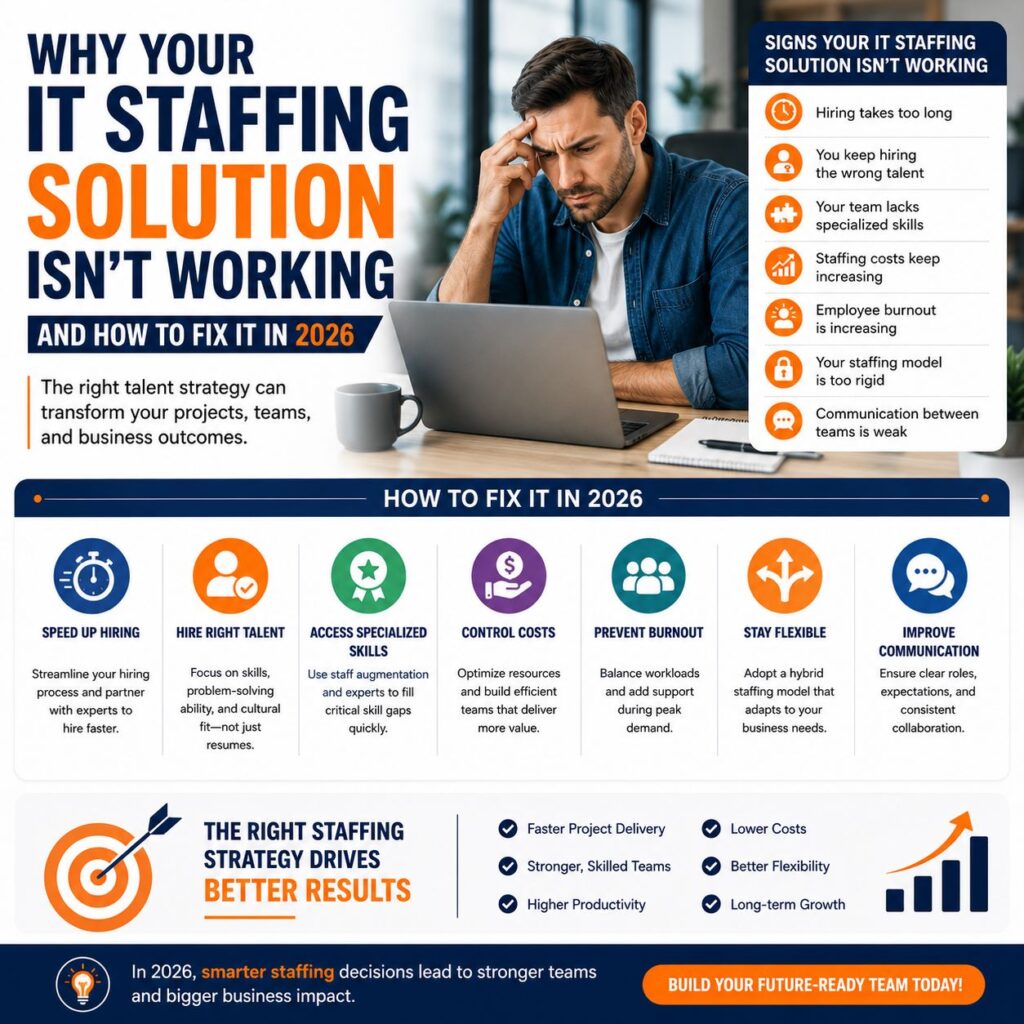
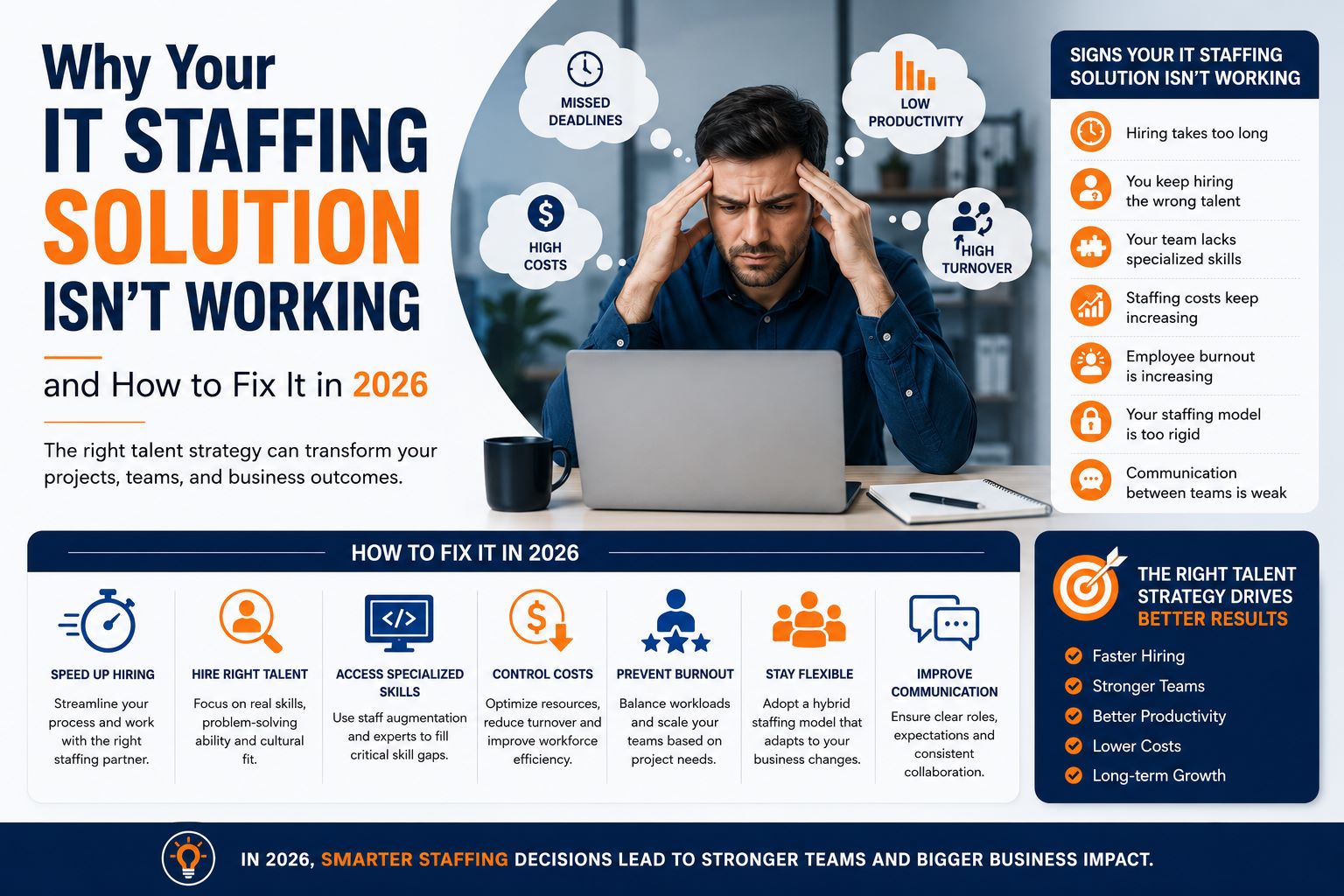
Why Your IT Staffing Solution Isn’t Working and How to Fix It in 2026
The tech world never stands still, and neither should your approach to building an IT team. If your current IT staffing solution feels like it’s constantly playing catch-up, leaving you with critical skill gaps, high turnover, or endless recruitment cycles, you’re not alone. Many organizations are finding their traditional methods simply aren’t cutting it in today’s rapidly evolving landscape, especially as we look ahead to 2026.
The demands on IT departments are growing exponentially, driven by AI, cybersecurity threats, cloud migration, and data proliferation. Yet, finding and retaining the right talent feels harder than ever. This isn’t just a temporary blip; it’s a systemic challenge that requires a fundamental shift in strategy.
This article will explore the core reasons why your IT staffing solution might be failing and, more importantly, provide actionable strategies to future-proof your approach for success in 2026 and beyond.
Why Your Current IT Staffing Solution is Falling Short
Many organizations are still operating with recruitment and retention strategies that belong in a bygone era. The tech talent market is highly competitive, and candidates have more power and options than ever before.
Outdated Recruitment Strategies
Are you still relying on the same old job boards and generic postings? In 2026, that’s not enough to attract top-tier IT talent.
- Generic Job Descriptions: Vague requirements and uninspiring language fail to capture the attention of specialized professionals who are looking for specific challenges and growth opportunities.
- Passive Sourcing: Just posting and waiting is a losing game. The best candidates aren’t actively searching; they need to be found and engaged proactively.
- Ignoring Niche Platforms: Tech professionals congregate in specific online communities, forums, and specialized job boards that traditional recruiters often overlook.
Ignoring the Evolving Tech Landscape
The pace of technological change is relentless. What was cutting-edge last year might be standard or even obsolete by 2026.
- Focus on Existing Skills Only: Hiring solely based on a candidate’s current skill set without considering their adaptability or potential for growth is a recipe for future skill gaps.
- Underestimating Emerging Technologies: AI, quantum computing, advanced cybersecurity, and Web3 are creating new demand for skills that many companies aren’t prepared to identify or evaluate.
- Lack of Continuous Learning Investment: If your organization doesn’t prioritize and facilitate ongoing upskilling and reskilling, your existing team will quickly fall behind, leading to attrition and increased hiring needs.
Poor Candidate Experience
In a talent-short market, the candidate experience is paramount. A clunky, impersonal, or drawn-out hiring process can quickly turn off top prospects.
- Lengthy and Complex Application Processes: Too many steps, irrelevant questions, and redundant forms frustrate candidates before they even get a chance to show their value.
- Lack of Communication: Ghosting applicants or providing generic, infrequent updates shows a lack of respect and damages your employer brand.
- Impersonal Interactions: Candidates want to feel valued and understood, not like another resume in a pile.
Internal Misalignment
Effective IT staffing isn’t just an HR function; it requires deep collaboration and understanding across departments.
- IT-HR Disconnect: A lack of clear communication between IT leadership (who understand the technical needs) and HR (who manage recruitment processes) leads to misidentified requirements and poor hiring decisions.
- Unclear Project Needs and Roadmaps: Without a clear vision for future projects and technological direction, it’s impossible to accurately forecast future skill requirements.
- Budget Constraints vs. Talent Quality: Prioritizing cost savings over securing highly skilled talent often leads to compromises that cost more in the long run through project delays or rework.
Ignoring Employee Retention
Many organizations focus all their energy on hiring, only to neglect the crucial aspect of keeping their valuable IT professionals engaged and motivated.
- Lack of Career Development Paths: Tech talent thrives on growth. Without clear opportunities for advancement, learning, and new challenges, employees will look elsewhere.
- Poor Work-Life Balance and Burnout: High-pressure environments without adequate support, recognition, or flexibility lead to rapid burnout and turnover.
- Inadequate Compensation and Benefits: While not the only factor, uncompetitive salaries and benefits will inevitably drive top performers to companies that value their contributions more appropriately.
How to Future-Proof Your IT Staffing Solution for 2026
Fixing your IT staffing challenges requires a proactive, holistic, and forward-thinking approach. It’s about building a sustainable ecosystem for talent, not just filling immediate vacancies.
1. Embrace Proactive Talent Acquisition
Shift from reactive hiring to strategic talent attraction and pipeline building.
- Build Talent Pipelines: Continuously identify, engage, and nurture relationships with potential candidates, even when you don’t have an immediate opening. Leverage professional networks, industry events, and online communities.
- Leverage AI for Smarter Matching: Utilize AI-powered tools to identify candidates with specific skill sets, analyze cultural fit, and automate initial screening, freeing up recruiters for more strategic engagement.
- Invest in Your Employer Brand: Showcase your company culture, innovative projects, and growth opportunities. Use employee testimonials, social media, and thought leadership to attract talent.
2. Prioritize Skills Agility and Continuous Learning
In 2026, learnability will be as crucial as current skills.
- Hire for Potential and Adaptability: Look for candidates who demonstrate a strong desire to learn, problem-solving abilities, and a proven track record of adapting to new technologies.
- Implement Robust Upskilling and Reskilling Programs: Invest in internal training, certifications, online courses, and mentorship programs to keep your existing team’s skills current and future-proof.
- Cross-Functional Training: Encourage IT professionals to develop skills in related areas, fostering a more versatile and resilient team.
3. Optimize the Candidate and Employee Journey
Create an experience that attracts, engages, and retains top talent.
- Streamlined and Personalized Hiring Process: Simplify applications, provide clear communication at every stage, and offer personalized feedback. Use technology to enhance, not hinder, the human touch.
- Focus on Employee Well-being and Development: Offer competitive compensation, comprehensive benefits, flexible work arrangements, and a supportive work environment that prioritizes mental health and work-life balance.
- Foster a Strong, Inclusive Company Culture: Create an environment where IT professionals feel valued, respected, and empowered to innovate. Promote diversity, equity, and inclusion.
4. Strategic Partnership and Collaboration
Break down silos and leverage external expertise.
- Align IT and HR Goals: Establish clear communication channels and shared objectives between IT leadership and HR to ensure staffing strategies directly support business and technological needs.
- Consider Specialized IT Staffing Firms as Strategic Partners: Engage with firms that have deep expertise in specific tech domains and a strong network of candidates. They can offer insights, access to passive talent, and market intelligence.
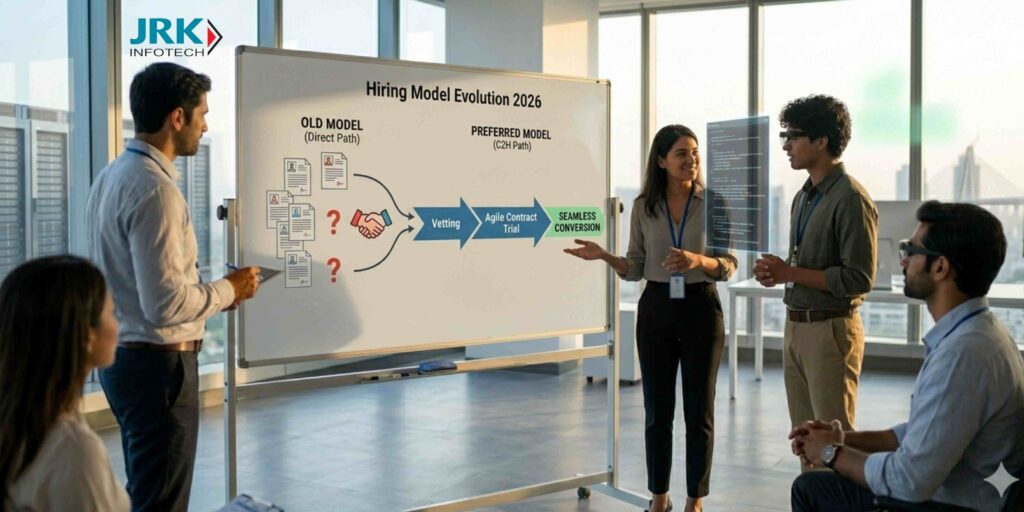
- Leverage Contingent Workforce Models: For project-based work or specialized short-term needs, consider contractors, consultants, or fractional roles to gain immediate access to niche skills without long-term commitments.
5. Data-Driven Decision Making
Use analytics to inform and refine your IT staffing strategies.
- Track Key Hiring Metrics: Monitor time-to-hire, cost-per-hire, offer acceptance rates, and source-of-hire to identify bottlenecks and optimize your recruitment process.
- Forecast Future Skill Needs: Utilize market trends, project roadmaps, and skills gap analyses to proactively predict the IT roles and skills you’ll need in 1-3 years.
- Measure Retention and Engagement: Regularly survey employees, conduct exit interviews, and analyze turnover rates to understand what keeps your IT talent engaged and what drives them away.