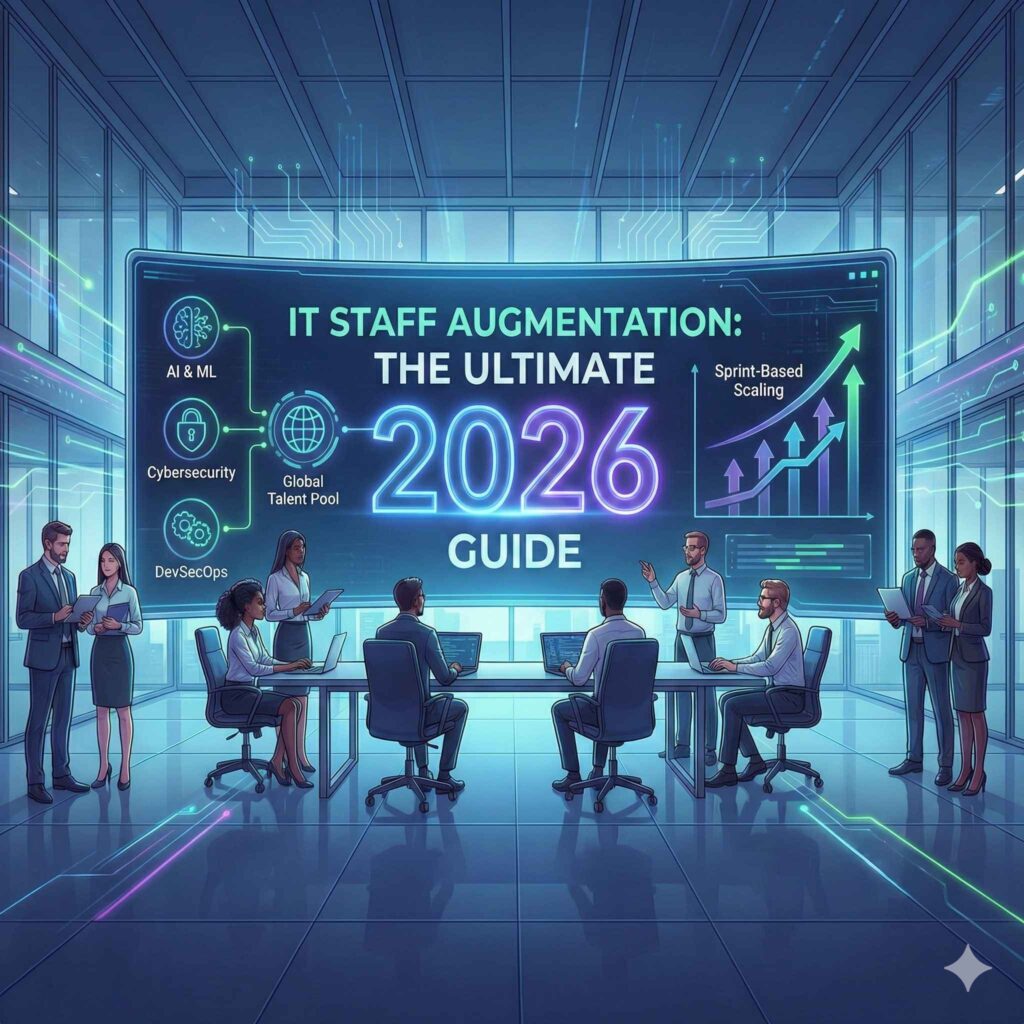

What is IT Staff Augmentation? The Ultimate 2026 Guide
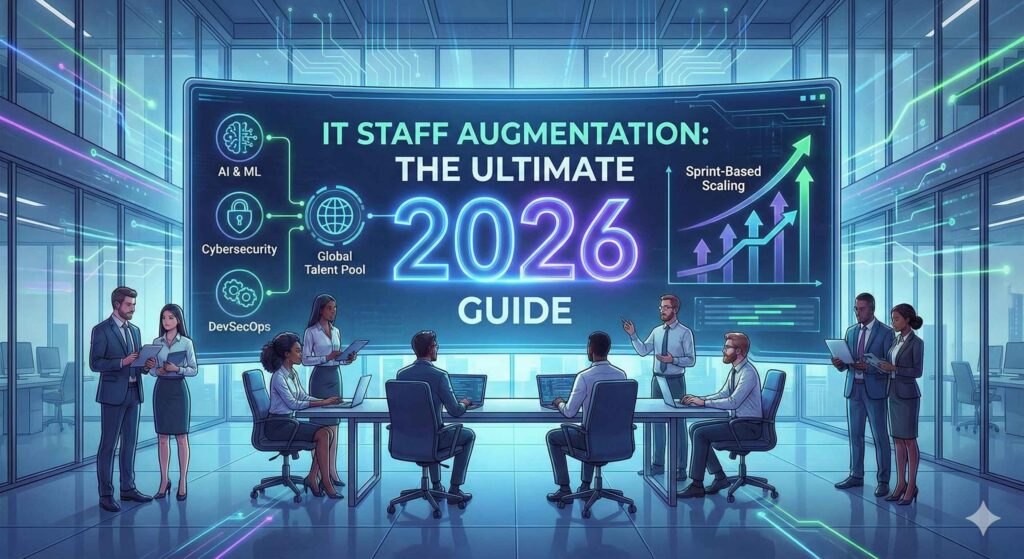
In the fast-moving tech landscape of 2026, the question for CTOs and founders is no longer, “Should we hire?” but rather, “How fast can we scale?” With the global IT talent shortage persisting and the pace of AI-driven development reaching a fever pitch, traditional hiring cycles of 60+ days are no longer sustainable. Enter IT Staff Augmentation—the strategic lever that modern enterprises are using to stay agile, lean, and competitive.
What is IT Staff Augmentation?
At its core, IT Staff Augmentation is a flexible outsourcing model that allows you to add specialized tech talent to your existing in-house team on a temporary basis.
Unlike traditional outsourcing (where you hand over an entire project to a vendor), augmented staff work directly under your management and follow your processes. Think of it as “plug-and-play” expertise for your engineering department.
The 2026 Shift: Beyond Just “Filling Seats”
In 2026, staff augmentation has evolved. It’s no longer about finding a generic “Java Developer.” It’s about Hyper-Specialization. Companies are now using augmentation to acquire niche expertise in:
- AI & ML Implementation: Data scientists who can integrate LLMs into legacy workflows.
- Cybersecurity & Compliance: Experts who ensure apps are SOC2 or GDPR-compliant from day one.
- DevSecOps: Bridging the gap between rapid deployment and iron-clad security.
Why IT Leaders are Choosing Augmentation in 2026
The data is clear: the staff augmentation market is projected to hit $1.15 billion this year. Here is why:
1. The “Sprint-Based” Scaling Model
In 2026, projects move in high-velocity sprints. Augmentation allows you to ramp up a team for a 3-month product launch and scale back the moment you hit maintenance mode—without the “hiring-and-firing” headache.
2. Access to a Global “Vetted” Talent Pool
Why limit your search to your zip code? Augmentation opens doors to elite developers in nearshore hubs (like Latin America or Eastern Europe) who operate in your time zone but offer significant cost efficiencies.
3. Immediate ROI (Time-to-Hire)
Traditional hiring: 45–90 days. Staff Augmentation: 72 hours to 2 weeks. In a world where being first-to-market is the only advantage, those 2 months saved are the difference between winning and losing.
| Feature | IT Staff Augmentation | Managed Services |
| Control | You have 100% oversight | Partner manages delivery |
| Integration | Deeply embedded in your team | External/Independent |
| Scope | Flexible, task-by-task | Outcome-based (SLA) |
| Best For | Scaling internal capacity fast | Offloading non-core functions |
3 Trends Shaping Augmentation This Year
- AI-Powered Matching: In 2026, the best agencies use AI to match talent not just on “keywords,” but on code repository history and cultural “vibe” compatibility.
- Outcome-Based Contracts: We’re moving away from “hours logged.” Modern contracts often focus on milestones and delivery quality.
- Fractional Leadership: Need a CTO or Lead Architect for just 10 hours a week? Augmentation now covers high-level strategic roles, not just execution.
How to Choose the Right Partner in 2026
Don’t just pick the lowest hourly rate. To succeed, your partner must provide:
- A “Bench” of Vetted Talent: They should have developers ready to go, not start recruiting after you sign.
- Security & IP Protection: Ensure they have rigorous data protocols and clear IP ownership contracts.
- Cultural Alignment: Your augmented staff should participate in your Slack, join your stand-ups, and feel like part of the family.
Conclusion: The Future is Elastic
The most successful tech companies of 2026 aren’t the ones with the largest office buildings; they are the ones with the most elastic teams. IT Staff Augmentation provides the bridge between your current capacity and your ultimate vision.