

Hidden Costs of Traditional IT Hiring (And How Staff Augmentation Reduces Them)
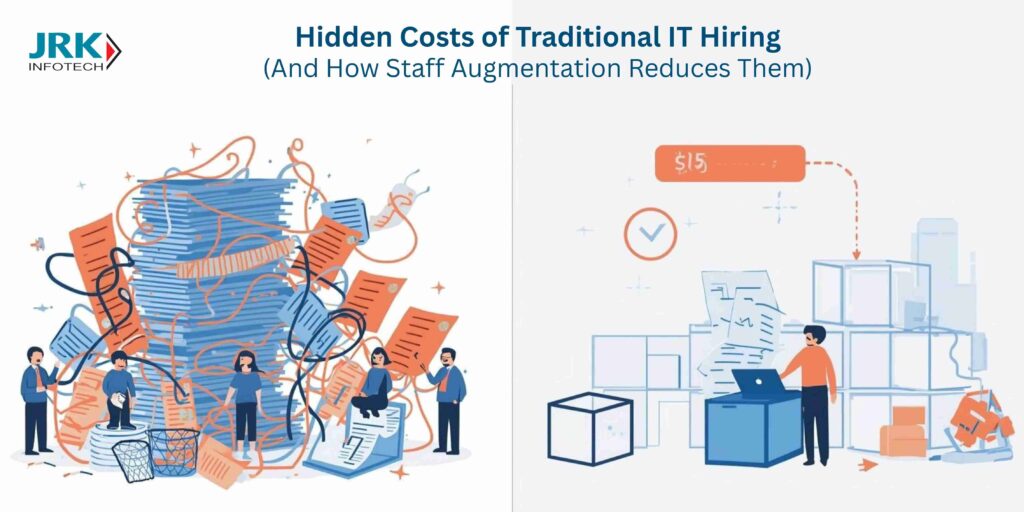
Traditional IT hiring might seem straightforward but often conceals numerous hidden costs that can significantly impact a company’s budget and project timelines. These costs extend far beyond salaries and recruitment fees, affecting productivity, innovation, and operational efficiency.
This article uncovers the less obvious expenses associated with permanent IT hiring and explains how IT staff augmentation offers a cost-effective alternative that delivers flexibility, speed, and specialized expertise.
What Are the Hidden Costs of Traditional IT Hiring?
- Extended Recruitment Cycles
Recruiting permanent IT staff involves long lead times—from posting jobs to screening, interviewing, and onboarding. This delays project starts and may increase costs due to prolonged vacancies. - Onboarding and Training Expenses
New hires require time and resources to get up to speed. Training programs, mentorship, and initial lower productivity periods add to overall expenses. - Employee Benefits and Overheads
Salaries are only part of the financial commitment. Benefits such as health insurance, paid leave, retirement plans, and office space contribute to a high fixed cost burden. - Turnover and Replacement Costs
IT roles often have high turnover rates. Losing employees means repeating recruitment and onboarding, causing disruption and extra costs. - Productivity Loss from Mismatches
Hiring the wrong candidate or a poor cultural fit can reduce team efficiency and require additional management effort to rectify. - Opportunity Costs
Slow hiring or skill gaps can delay innovation and time-to-market, causing lost revenue opportunities.
How IT Staff Augmentation Helps Cut These Costs
- Faster Access to Talent:
Staff augmentation firms maintain pools of pre-screened professionals ready to join projects quickly, reducing recruitment time drastically. - No Long-Term Commitment:
Organizations pay only for the duration and skills needed, avoiding the ongoing costs of benefits and permanent overheads. - Reduced Onboarding Time:
Augmented professionals often have prior experience and require less training, enabling immediate contribution. - Lower Turnover Risks:
Staffing providers manage retention and replacements, minimizing disruptions for the client. - Access to Specialized Skills:
Instead of investing time and money hiring for niche skills, companies tap into experts as needed, increasing project quality and speed. - Scalable Workforce:
Teams can expand or contract seamlessly based on project phases, avoiding underutilized resources or overburdened staff.
Financial Impact: Real-World Savings
Several businesses have reported cost savings of up to 30% by switching to staff augmentation models. For example:
- A retail company reduced their hiring cycle by 50% while gaining immediate access to cloud specialists.
- An enterprise technology firm cut benefit-related expenses significantly by using augmented professionals for short-term projects.
Conclusion
Traditional IT hiring carries many hidden costs that impact budgets and project success. IT staff augmentation offers a strategic way to manage these costs while ensuring access to high-quality talent quickly and flexibly.
By understanding these hidden expenses and leveraging staff augmentation, companies can optimize workforce spending, accelerate project delivery, and maintain competitive advantage.



1 Comment
London3974
January 25, 2026Start earning every time someone clicks—join now!