IT Staffing Models and Strategy: How to Build Scalable Tech Teams
In today’s rapidly evolving technology landscape, businesses must scale their engineering capabilities quickly to remain competitive. Whether launching new digital products, implementing AI-driven systems, or modernizing legacy infrastructure, organizations need access to the right technical talent at the right time.
However, traditional hiring processes often struggle to keep pace with fast-changing project demands. This is why companies are adopting flexible IT staffing models and strategies to build scalable, agile tech teams.
Understanding the right staffing approach allows organizations to balance cost efficiency, speed, and expertise while maintaining high productivity.
Understanding IT Staffing Models
IT staffing models refer to the different ways organizations source, structure, and manage technical talent to support their projects and business goals.
The most common IT staffing models include:
1. In-House Hiring
This traditional model involves hiring full-time employees who become part of the organization’s internal workforce.
Advantages
- Strong cultural alignment
- Long-term knowledge retention
- Greater control over processes
Challenges
- Longer recruitment cycles
- Higher operational costs
- Limited scalability during sudden project demands
While in-house hiring remains important for core roles, many companies combine it with other staffing models to increase flexibility.
2. IT Staff Augmentation
Staff augmentation allows businesses to add skilled external professionals to their internal teams temporarily.
These professionals work alongside internal staff while remaining employed by a staffing provider.
Benefits
- Faster hiring and deployment
- Access to specialized technical expertise
- Flexible scaling based on project needs
- Reduced long-term payroll commitments
Staff augmentation is particularly useful for short-term projects, technology migrations, and rapid product development.
3. Managed Services
In a managed services model, a service provider takes responsibility for managing specific IT functions or projects.
Instead of hiring individual professionals, organizations outsource the management and delivery of defined outcomes.
Benefits
- Reduced operational burden
- Predictable costs through service-level agreements (SLAs)
- Access to experienced teams and infrastructure
This model is ideal for ongoing operations such as cloud management, cybersecurity monitoring, or IT infrastructure maintenance.
4. Project-Based Outsourcing
Under this model, an external vendor handles the entire development or implementation of a specific project.
Advantages
- Faster execution for well-defined projects
- Access to experienced teams
- Reduced internal resource allocation
However, this model may limit direct control over project processes.
Choosing the Right IT Staffing Strategy
Selecting the right staffing strategy depends on several factors:
Project Complexity
Complex or specialized projects often require niche technical expertise that may not exist within internal teams.
Time-to-Market
When product launch timelines are tight, flexible staffing models like staff augmentation help accelerate development.
Budget Considerations
Different staffing models involve different cost structures, including salaries, contracts, and service agreements.
Long-Term Workforce Planning
Organizations should balance permanent employees with flexible resources to maintain stability while adapting to growth.
Building Scalable Tech Teams
To create scalable technology teams, businesses should focus on the following strategies:
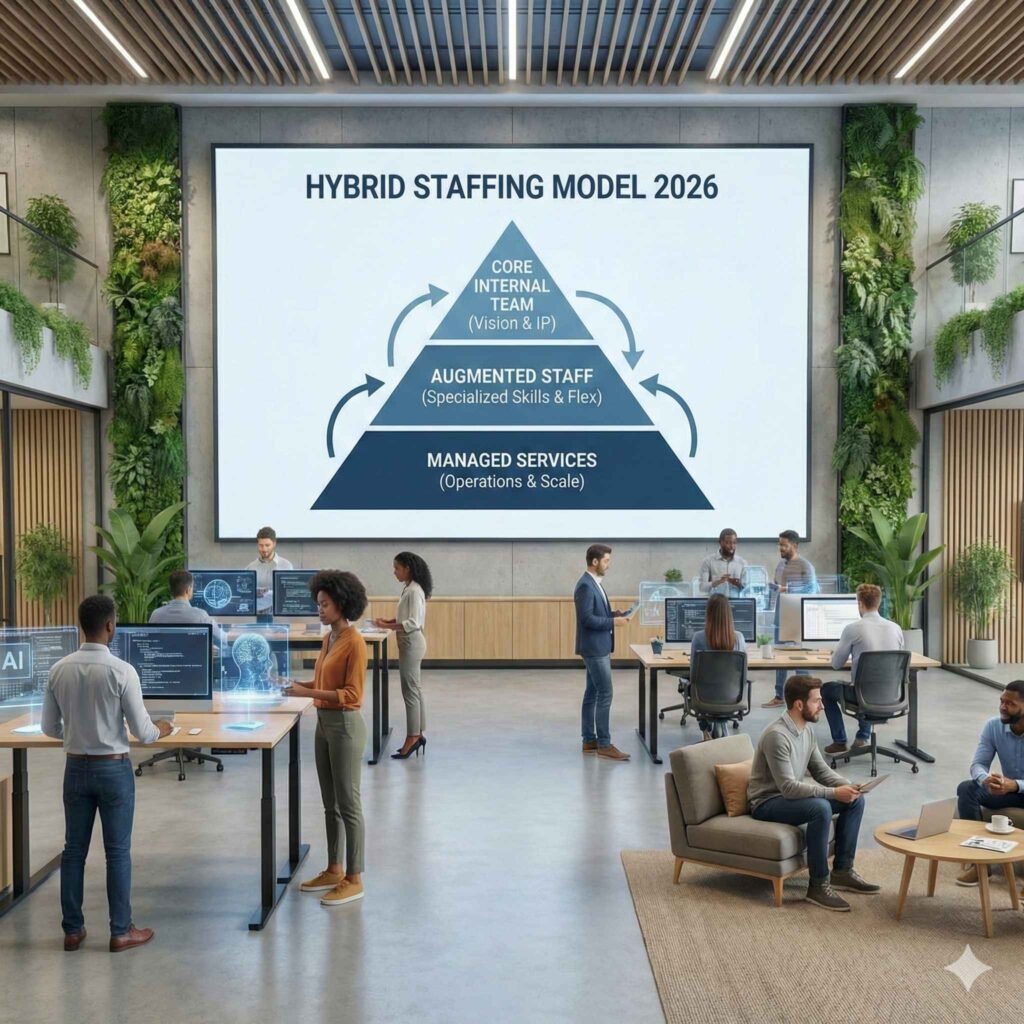
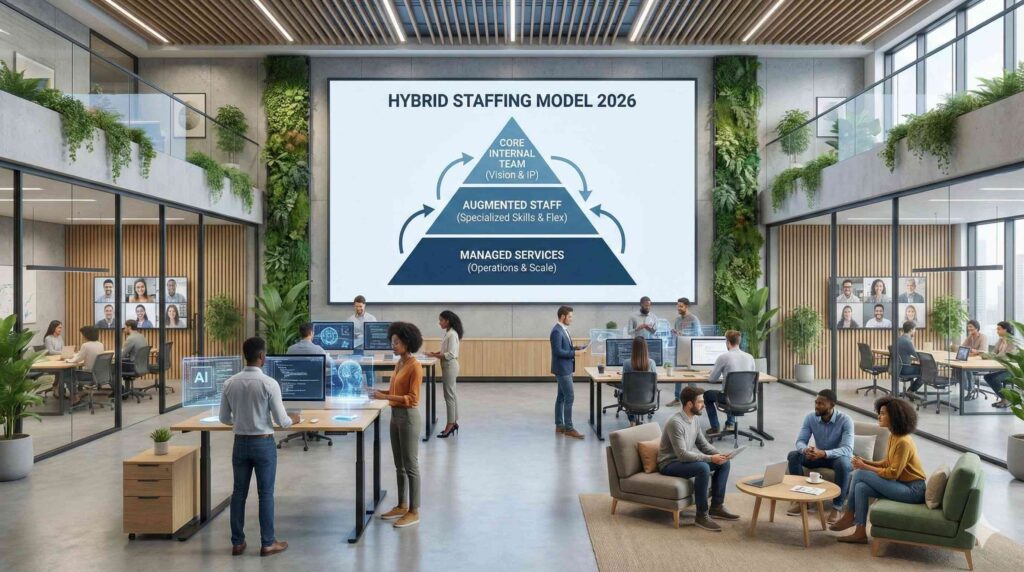
Adopt a Hybrid Staffing Model
Combining in-house employees with augmented staff and managed services allows organizations to adapt to changing project needs.
Focus on Specialized Skills
Technology is evolving rapidly, making niche expertise increasingly valuable. Leveraging external talent helps organizations access skills in areas such as:
- Cloud computing
- Artificial intelligence
- DevOps automation
- Cybersecurity
- Data engineering
Improve Workforce Agility
Agile teams can quickly respond to changing project priorities. Flexible staffing models ensure businesses can scale resources when needed.
Strengthen Talent Partnerships
Partnering with experienced IT staffing providers ensures access to vetted professionals and reduces recruitment delays.
The Role of IT Staffing Partners
IT staffing partners play a critical role in helping businesses build scalable technology teams. They provide:
- Access to global talent pools
- Faster recruitment and onboarding processes
- Technical screening and skill verification
- Flexible engagement models
By working with trusted staffing partners, organizations can maintain productivity while reducing hiring risks.
Why Businesses Are Prioritizing Scalable Staffing in 2026
In 2026, technology adoption is accelerating across every industry. Companies are investing heavily in cloud transformation, automation, AI integration, and cybersecurity.
As a result, demand for skilled IT professionals continues to grow. Organizations that rely solely on traditional hiring methods may struggle to meet these demands.
Scalable staffing strategies help businesses remain competitive by enabling them to expand technical capabilities quickly while maintaining operational efficiency.
Final Thoughts
Building scalable tech teams requires a well-defined IT staffing strategy that combines the strengths of multiple workforce models. By leveraging in-house talent, staff augmentation, managed services, and project-based outsourcing, businesses can create flexible teams capable of adapting to evolving technology needs.
Organizations that invest in the right staffing strategy will be better positioned to innovate, accelerate product development, and succeed in the increasingly competitive digital economy.