

IT Workforce Planning in Uncertain Times: A Staffing Playbook for 2026
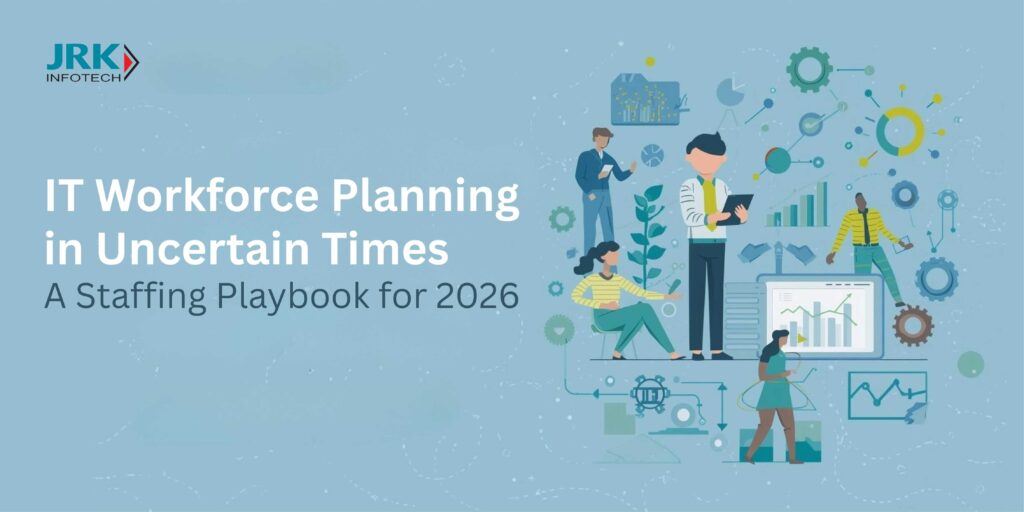
As we move deeper into 2026, uncertainty remains a defining factor for businesses worldwide. Economic fluctuations, rapid technological change, evolving regulatory landscapes, and shifting workforce expectations create unprecedented challenges for IT workforce planning. CIOs and HR leaders must adopt forward-thinking strategies to build resilient, scalable IT teams capable of thriving in unpredictable conditions. This staffing playbook offers a practical guide for effective IT workforce planning in uncertain times.
Understanding the New Normal of Workforce Uncertainty
The post-pandemic world has reshaped how organizations view workforce management. Remote and hybrid work models, fluctuating project demands, and skill shortages are now permanent considerations. In this environment, static headcount models and rigid hiring plans no longer suffice. Flexibility, agility, and foresight have become critical for IT workforce success.
Key uncertainty drivers include:
- Economic Volatility: Budget constraints and shifting investment priorities impact hiring and retention.
- Technology Disruption: Emerging technologies like AI, automation, and edge computing continuously reshape skills demand.
- Talent Market Dynamics: Intense competition for niche IT skills drives up turnover and complicates recruitment.
- Regulatory Changes: Data privacy, cybersecurity, and compliance requirements introduce new workforce capabilities needs.
Building a Flexible Staffing Strategy for 2026
Effective workforce planning balances immediate project needs with long-term business goals. Here’s how organizations can approach this balance amid uncertainty:
- Scenario-Based Planning: Develop multiple staffing scenarios aligned with different business and market conditions. This prepares teams to scale resources up or down as needed.
- Skill Gap Analysis: Regularly assess current team capabilities against future technology roadmaps to identify critical gaps early.
- Agile Hiring Models: Embrace IT staff augmentation, contract workers, and managed services to flexibly address shifting skill requirements.
- Cross-Training and Reskilling: Invest in employee development programs to build internal adaptability and reduce reliance on external hires.
- Workforce Analytics: Leverage data-driven tools to monitor talent trends, productivity, and attrition, enabling proactive staffing decisions.
Leveraging IT Staff Augmentation as a Core Tool
In uncertain times, IT staff augmentation offers distinct advantages:
- Speed and Agility: Quickly onboard skilled professionals for specific projects or short-term needs without long recruitment cycles.
- Cost Efficiency: Control labor costs by paying only for required skills and durations, reducing fixed payroll expenses.
- Access to Niche Talent: Tap into specialized expertise that may be scarce or unavailable internally.
- Risk Mitigation: Scale workforce resources up or down based on evolving business priorities, avoiding overstaffing or shortages.
Integrating Workforce Planning with Business Strategy
IT workforce planning should not operate in isolation. Alignment with overall business strategy ensures that staffing decisions support innovation, customer demands, and growth objectives. Regular communication between CIOs, HR, and executive leadership is vital to synchronize workforce plans with financial forecasts and market trends.
Best Practices for Implementation
- Continuous Monitoring and Adjustment: Workforce plans must be dynamic, with frequent reviews and adjustments based on real-time data.
- Collaboration Across Departments: Involve cross-functional teams to capture diverse insights and foster buy-in.
- Technology Adoption: Use workforce management platforms to streamline planning, scheduling, and talent acquisition workflows.
- Employee Engagement Focus: Maintain morale and retention by involving employees in career development and reskilling opportunities.
Conclusion
Navigating the complexities of IT workforce planning in uncertain times demands a proactive, flexible approach. The 2026 staffing playbook combines strategic foresight, agile hiring, and continuous learning to help businesses build resilient IT teams that adapt and thrive. By embracing these principles, organizations can secure the right talent, optimize costs, and drive successful digital transformation amid volatility.



3 Comments
Stephen731
March 12, 2026Tap into a new revenue stream—become an affiliate partner!
XRumer23faB
March 12, 2026sex video real child with old man
metoclopramide reglan
March 21, 2026metoclopramide reglan
metoclopramide reglan